Sunday, February 2, 2014

Burn the Image: A Review of Cities Aviv's "Come to Life"


Only a couple days before Hurricane Sandy ran it's course through the New York area, Kendrick Lamar destroyed the rap mainstream with the release of the jaw dropping, magnum opus, good kid, m.A.A.d city. Flooring critics and fans alike (sometimes both, hi), good kid, m.A.A.d city was somewhat of an anomaly in mainstream rap, a multifaceted and heavy concept album, intent on evoking complex emotions from listeners and artist alike. However, compared to such an album as Kendrick's previous Section.80, good kid's ambition didn't come as a surprise.

In the following November, Memphis by way of Brooklyn rapper Gavin Mays, who goes by Cities Aviv, dropped the flat-out brilliant Black Pleasure, which didn't happen to destroy the mainstream like good kid, but destroyed mine and my small group of friends who happened to listen to rap's perception of rap music. After seeing a show at the Knitting Factory, enveloping myself in Mays' back catalogue ("Planet" being one of my favorite finds), holing up for a week listening to follow punk rappers Antwon and B L A C K I E, Black Pleasure may have been my most anticipated album of 2012. Dropping like a bomb in my understanding of rap and it's surrounding culture, Black Pleasure broke the rules. Who says the rapper has to be "heard"? Who says you can't reference various post-punk icons like Ian Curtis? Who says you can't say you dislike True Religion?

Unfortunately, Black Pleasure came as a surprise to many, who were expecting more "feel-good" singles from Cities Aviv, such as "Coastin" or "Float On". His debut mixtape, Digital Lows, was still a heady listen, but radiated warmth through it's iPod shuffling dynamics. Black Pleasure was the sound of an artist trying to distance himself from the misunderstood sentiments of his body of work, marred by blogs gushing over a rapper's single from a 7-inch, not bothering to check out the even better deep cuts.

Cities Aviv's newest, Come to Life (which is considered to be his debut album, even though he wanted Black Pleasure to be considered an album), comes as less of a surprise as Black Pleasure. This however, does not hurt the album in any shape or form. If anything, this only aids the album more, allowing the listener to be overcome with the lovingly layered textures of music, thus giving the music a familiar feel. This may not be apparent through "Intro", a chunk of noise that dissolves into Cities whispering "come to life". But once the choppy eight-bit sample of "Fool" kicks in, the album picks up. Throughout his career, Mays has expressed his love-hate relationship with the internet and what it entails through both interviews and music ("Stimulation" from Black Pleasure and the single "Power Exchange"), and "Fool" is no different. What could be misunderstood as a diss track, "Fool" acts as a self proclamation of surviving in an era such as ours. "You won't make it through the summer" he says in the direction of the numerous e-rappers, later understanding their plight ("you must be stupid if you think they give a fuck about this message in your music... tomorrow such a phase / a name without a face").

Much of the music of Come to Life deals with realization of the self. Over a chirping soul loop, "URL IRL" finds Mays in full on attack, rapping loudly (alluding to his punk roots in the local Memphis hardcore band, Copwatch) claiming that all these guys who rep their "status and [their] hood... don't know what's good". The short interlude "CTL1" finds fellow rapper / ex-hardcore punk Abdu Ali ruminating on what it means to "come to life"; "just do you".

Mays expressed how he felt Come to Life melded together the more nostalgic vibe of Digital Lows with the more violent and unorthodox production choices of Black Pleasure, and Come to Life has proven this. "Perpetuate the Real" finds Mays in full on lover-man mode, stating "your body tastes like chocolate sweet strawberries". Where Black Pleasure had the jaw-dropping "Not That I'm Anywhere" as a closer, Come to Life ends with the hopeful "Don't Ever Look Back", where in a series of short, rapped mantras, Mays is able to encapsulate all the tones of Come to Life. "I just woke up and I still love you," he intones at one point, and at another, "you so fake I don't know who you is." All of this over a stuttering, static laden soul sample which is looped into infinity.

The way Mays approaches the beats for a Cities Aviv album is similar to the way RZA did with the early Wu-Tang Clan releases; they had to be good enough that they could keep the listener interested, even when there wasn't a dude rapping for a prolonged period of time. There's nothing such as GZA's "Cold World", but the beats here are so chuck full of detail that one can't help but be entranced by them. Mays is responsible for some of the best on the album (the Oneohtrix Point Never sampling "Realms" and the moaning "Perpetuate the Real") and Houston noise terrorist B L A C K I E adds his signature touch to "(Self 100): Know Who You Are". However, what has been Mays' secret weapon on all past releases is the relatively unknown producer, RPLDGHSTS. Some of the most stark cuts of the Cities Aviv catalogue have been helmed by RPLDGHSTS and it's no different here; the muted horn sample on "Dissolve" or the sparkling yet sinister "Worlds of Pressure".

Digital Lows happened to have a great sense of humor at times (most notably the line about "girls whose favorite band is Mr. Bungle" from "Fuckeverybodyhere"). Some of that humor is renewed on Come to Life, like when Mays shouts out "these bitches twerkin' futuristic". However, the personal (and personable) themes from Black Pleasure are still prevalent. "Dissolve" finds Mays citing how our bodies will all turn into dust, in the semi-chorus of "Worlds of Pressure" (a staple of the live set for the past year), Mays chants "I can give it to you, I can take it away!" and in "Still" he confesses how he's "never felt more alone". Mays once again alludes to his hardcore days, taking on a full-throated vocal affectation on the excellent "Vibrations" where he growls "black skin, black boots but nowhere to go".

The way Mays approaches a Cities Aviv album is more accustomed to ex-LCD Soundsystem mastermind James Murphy instead of someone like, say, Joey Bada$$. He's a music nerd, who seems more interested in whole the whole thing sounds, the way his voice blends with sounds, instead of riding on some hood shit. He's part of a small pocket of rappers who seem intent on tearing down the common rap tropes, like Shadowrunners, Antwon, Oddisee and Milo. Rap music nowadays can stem from something as little as some guy with a barely working mic and a decent backing track; the rest is up to them. Rap music is exciting once again.

Cities Aviv - Come to Life
9/10
Recommended Tracks - "Fool", "URL IRL", "Dissolve", "(Self 100): Know Who You Are", "Vibrations", "Worlds of Pressure", "Don't Ever Look Back"

Monday, December 23, 2013

The Year in Music (Love, Nostalgia, Death, Sex, Life)

Doldrums at Primavera Sound 2013

"Who has time to listen to a fucking double album anymore?"
-Neil Gallagher

"Periods in pop are as vague, and as potentially powerful, as royal statements."
-Sasha Frere-Jones

The two quotes cited above come from the New Yorker's premier music journalist and from Birtpop's biggest asshole. One is there to encompass what made 2013, 2013. The other is included as a (quite dumb) counter statement to the other (as well as showcase how much we shouldn't like the Gallahgers).
You may have also noticed that this isn't a list. If pop music, as Frere-Jones calls it, is as powerful as a royal statement, then who are we to quantify what albums are better than others?

However, there is still a list at the bottom, because certain individuals do happen to like having their favorite music quantified by others, which is why websites such as Pitchfork are such behemoths when it comes to music criticism. There are forty albums listed later, and not all of the artists garnering a spot will be mentioned; not all artists in these coming paragraphs will be in the list in the bottom, but were still worthy of praise.

I decided to compile my favorite music of 2013 in a format such as this, because it's gotten to the point, where suddenly everything is in a list, to the point where the music industry has become dependent on artists gaining a spot in end of year lists.

Which is why some of my favorites of 2013, belonged to the most unmarketable sub-genres imaginable. Pharmakon (the solo noise project of Brooklyn's own Margaret Chardiet), brought together some of the least appealing sounds and melted them down into twenty six minute's worth of pure terror on Abandon. The most compelling track, is the closer, "Crawling On Bruised Knees", featuring sickening synths, a pounding (yet monotonous) drum pattern and shrieked vocals, that search for catharsis that is never achieved (for other unmarketable artists, see: Pissed Jeans, Perfect Pussy, and Age Coin).

Chardiet also had one of my favorite guest spots of the year, on the title track of Vår's No One Dances Quite Like My Brothers. Over a bed of pillowy synths, Chardiet gives a post-apocalyptic, sensual spoken word piece, proving to be the album's brightest spot. The rest belongs to the core duo of Elias Rønnenfelt (of Iceage) and Loke Rahbek (the go-to guy for any experimental Danish band) who like to moan dour, existential lyrics over chilly post-punk sounds. Not for the faint of heart, No One Dances Quite Like My Brothers remains one of the year's most compelling statements.

But Rønnenfelt really shined with his main band, Iceage, and their excellent sophomore release, You're Nothing. It was six a.m. at Heathrow Airport in London, and I had just landed from a night without any sleep. Bleary eyed and jet lagged, I crawled into a black cab and as I took in the strange, new landscape, I allowed my ears to be pummeled for twenty-eight minutes. From the furious, 1-2 punch of openers, "Ecstasy" and "Coalition" to the punk prom of the piano tinged "Morals" to the incendiary closing title track, it was an unforgettable experience.

Iceage decided to give You're Nothing a heftier sound, compared to the brittle New Brigade, and they weren't the only punk band who decided to change it up for 2013. The prime examples are Milk Music, the Men, and Mikal Cronin, who decided to head out to the country. Milk Music's debut, Cruise Your Illusion, differs a lot from their Beyond Living EP, and all for the better. Frontman Alex Coxen lays down some good ol' rock and roll poetry (sometimes jaded, sometimes sad, sometimes in love) over some of the year's most rockin' dual guitar sounds. The Men, for New Moon, found more inspiration from the Band, with harmonicas and electric pianos all making a welcome appearance. They somehow manage to distill Crazy Horse, Neil Young, and Dinosaur Jr. into the album's epic centerpiece, "I Saw Her Face". Cronin ditched the lo-fi tendency on MCII, a blast of power-pop in the vein of Matthew Sweet and Superchunk (with a dash of Gram Parsons). And like those artists, Cronin knows how to display his twenty something ennui, especially on tracks like "Weight", "Turn Away" and "Piano Mantra".

Some punk bands used variations on an already winning formula, but others made urgent statements, with (proper) debuts, such as Speedy Ortiz or California X. Parquet Courts' jittery Light Up Gold, got a wide release this year, pushing the New York Texans' beyond small circles; and rightfully so. The Courts play with the energy of Wire and the wit of Pavement. "Stoned and Starving" spends time in Queens bodegas, debating snacks, and "Borrowed Time" sees our time slipping through our hands. Parquet Courts' lyrics are a pleasure to pore over, just like Waxahatchee, who released the excellent Cerulean Salt this year. Waxahatchee is the solo project of Katie Crutchfield, and on it, she sounds a bit hurt, kind of confused, disheveled, maybe a bit hungover. Crutchfield displays all these uncomfortable truths that sound so familiar to us once we hear them, making Cerulean Salt one of the most enjoyably honest records of 2013.
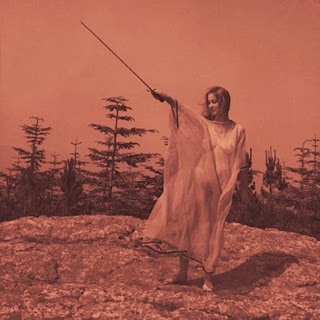
Unknown Mortal Orchestra's II

Still, many artists decided to take different approaches to records released in 2013. Wavves went on some kind of Nirvana kick, Thee Oh Sees went even more insane on Floating Coffin, Surfer Blood became a smooth running pop-rock band and Wild Nothing suddenly recruited David Byrne. One artist who made quite the laudable risk, was Unknown Mortal Orchestra on II. Main man Ruban Nielson somehow reached a point, where his guitar experimentation was just as accessible as his smooth-running singles. However, II works as a dark trip into Nielson's psyche, which at first doesn't seem to be too bad, until he intones that "isolation can put a gun in your hand" on opener, "From the Sun". There's the serpentining "The Opposite of Afternoon", where Nielson cites broken bones and slit wrists, the punk-ish "Swim and Sleep (Like a Shark)" where addiction looms in the details, and the soulful yet melancholy "So Good At Being in Trouble".

On the same wavelength as Unknown Mortal Orchestra (in mining pyschedelia and rock's past) is Foxygen (both bands coincidentally toured together). Foxygen have been very well known for their inter-band drama throughout the year, none of which will be mentioned, but when listening to their sophomore effort, We Are the 21st Century Ambassadors of Peace and Magic, you find their drama forgettable, where the music is anything but. Unlike Nielson, frontman Sam France focuses his lyrics on hyper-specifics, most notably on the Velvets-esque "No Destruction". "I found you sipping milkshakes in the parlor of the hotel", France purrs, sounding hurt. Later, he just wants someone to smoke pot in the subway with, reads the bible, meets someone's daughter (who happens to have rhino shaped earrings in her ears) and sings about love.

We could also cite 2013 as the year of "emotional electronics". It's a well known fact that electronic music can seem a bit lifeless, but some artists seemed intent on blowing that notion out of the water. Rhye made sex music for those who'd rather say "make love" (doesn't hurt that Woman is like a cross between Sade and Air). There was Baths, the project of Will Wiesenfeld, who maintained a bleak outlook on the excellent Obsidian, offering uncomfortable ruminations of sex and death. Daughn Gibson infused his trucker blues with some Nicolas Jaar tones on the brilliant Me Moan. Gibson's baritone is backed by sampled vocal arpeggios on "You Don't Fade", and screaming bagpipes on "Mad Ocean". But it's "Franco", a song depicting a family marred by a suicide, that remains the album's most potent and poignant statement. And speaking of Nicolas Jaar, he got together with guitarist Dave Harrington as Darkside, and re-imagined electronic and pyschedelic music on the excellent Psychic. And if you still wanted something to dance to, listen to Doldrums' Lesser Evil.

Matthew Otto and Devon Welsh of Majical Cloudz

But the best electronic music was that of which placed us inside ourselves. The best examples of this are Majical Cloudz's Impersonator and Autre Ne Veut's Anxiety (no coincidence both musicians are friends of the other). Devon Welsh of Majical Cloudz is straight edge, has a shaved head, wears only white t-shirts and jeans, and speaks in interviews like Ian MacKaye. However, his music with producer Matthew Otto is minimalist electronic and pop, but when paired with Welsh's nakedly emotional lyrics, it has the same urgent effect of any hardcore band. Impersonator is vague, yet somehow specific, some anomaly floating in the fog. Welsh's lyrics evoke childhood marred by a gunshot ("Childhood's End"), succumbing to your worst fears ("This Is Magic") and offers ruminations on death and love at the same time (the chillingly beautiful "Bugs Don't Buzz"). Autre Ne Veut's Anxiety has the same lyrical effect as Impersonator but is crammed with bizarre sounds and screaming electronics. It is anything but subdued, with Arthur Ashin screaming himself raw in chest-beating, teary eyed catharsis. The songs of the aptly titled Anxiety all strike a deep chord, but no more on the brilliant highlights "Play By Play", "Counting" and "World War".

It seems that some of the best music of 2013 actually placed us inside of ourselves, making us realize our faults, but comforting us at the same time. The National continued their stories of middle aged malaise on the excellent Trouble Will Find Me, which held some of Matt Berninger's best stingers yet ("you didn't see me I was falling apart, I was a white girl in a crowd of white girls in the park" from "Pink Rabbits"). Phosphorescent lost both his studio and a girlfriend in rapid succession, so he traveled down to Mexico, to write the heartbroken Muchacho. Yet, never has a record been so saddening, but life affirming at the same time as Muchacho, especially on "Song for Zula", a lovelorn trip through the desert, recalling U2, Springsteen and Fleet Foxes. Jordan Lee makes beautiful music as Mutual Benefit, and I can't think of a more truly titled record than Love's Crushing Diamond. Lee finds himself falling in love, quitting his job, watching his friend struggle with addiction and picking flowers by the river. Songs like "Golden Wake" and "Advanced Falconry" revel in their simplicity, while still being profound statements, and "C.L. Rosarian" and "Strong Swimmer" are beautiful ruminations on love as we know it.

Local Natives' Hummingbird
What came as surprising, was how Smith Westerns' Soft Will had the same effect as the aforementioned records. If Dye It Blonde was the party record, then Soft Will is the following night, a long exhale of things done wrong. Recalling All Things Must Pass and Bandwagonesque, the songs of Soft Will  are all about chain smoking, writing poetry, losing idols, losing love, comforting others and finally on the closer, "Varsity", finding love once again. Like Smith Westerns, no one thought a record like this could come from Local Natives, but it sure did on Hummingbird. After the sun kissed Gorilla Manor, Local Natives went through a period of change, with the departure of bassist Andy Hamm and the passing of pianist/singer Kelcey Ayer's mother. This is quite pronounced on the band's sophomore release, a record of densely layered, beautiful songs, bundled with personable emotion. There's the heartbreaking vocal ascent of "You & I", the specific details of a breakup on "Heavy Feet" ("flour in your hair / staples in your jeans / fireworks at the water / you were holding / a styrofoam cup in between your teeth"), the epic "Breakers" (best song of 2013) and the cathartic "Colombia". "Colombia" remains the album's centerpiece, with swelling strings, a stately piano, and a percussive build up. All of this as Ayer sings a song dedicated to his deceased mother ("Patricia, every night I ask myself / am I loving enough"). Hummingbird is an album that is emotionally draining, yet demands the listener to grow and heal with the band themselves.

Of course, there was also the year in debuts. Alex Calder was another welcome member of the Captured Tracks roster with Time and Sky Ferreira bridged the gap between Katy Perry and Suicide, on the excellent Night Time, My Time. There was also Yabadum's self titled debut, a record that pulled influences from indie bands gone by (The Strokes, Interpol, LCD Soundsystem). The band offers tight and interesting songwriting, especially on "Little Rooms" and the elegant closer, "Earth It Shakes". But no debut was more flat out brilliant than King Krule's 6 Feet Beneath the Moon. Archy Marshall is like Paul Weller with a sampler, or Mike Skinner with a telecaster. He seems to be the new voice of the disaffected British youth. His stance doesn't happen to be political though (maybe a wee bit on"Easy Easy"), but he focuses more on the world around him. He's a young man, growing up in a world like ours and he's experiencing what we all must at times. Sometimes he's pissed off ("A Lizard State"), heartbroken ("Has This Hit?"), depressed ("Cementality") and self loathing ("The Krockadile"). He recites some Dylan-esque poetry on "Baby Blue" and actually quotes poet W.H. Auden on "Ocean Bed". "Neptune Estate" is a lovingly composed, lovelorn piece, with a touch of Dilla. The perfect record for the late night train home.

Hebronix's Unreal
Ambition ran through much of 2013 as well. Merchandise made one of the most intricate post-punk/new-wave records on Totale Nite, and Beach Fossils successfully distilled every Brooklyn subgenre into Clash the Truth. Kurt Vile made the rockin' epic, Wakin On a Pretty Daze. Seventy minutes of pure drawled rock wisdom. Ex-Yuck frontman, Daniel Blumberg, recorded the best break up album the 90's never produced with Unreal. My Bloody Valentine proved they were still the best with m b v. Youth Lagoon left his garage, to record the deeply layered Wondrous Bughouse. Wondrous Bughouse can be ranked with the classic "big" records, like Deserter's Songs and The Soft Bulletin, not just in sound, but in lyrical content. 2013's best rap music was steeped in ambition, from Chance the Rapper, to Danny Brown, to Antwon, to Milo. Arcade Fire's Reflektor was a strong contender for most ambitious, a double album produced by James Murphy. Arcade Fire boogie out with David Bowie and Colin Stetson on the title track, and groove out on the better part of the first disc. But it's the second disc, that solidifies Arcade Fire's place, like the sweeping "Awful Sound (Oh Eurydice)" to the amazing finish of "Porno", "Afterlife" and "Supersymmetry".

Alex Zhang Hungtai, main member of Dirty Beaches

But no record was as ambitious, as personal, as cohesive, as cathartic, as Dirty Beaches' Drifters / Love is the Devil. Yes, this record, is the best of what 2013 had to offer. I don't listen to it as much as I should, but that only speaks to it's power. It's worked it's way so far into my psyche, that it becomes almost difficult to listen to, but whenever I listen to it again, I am still completely floored by it's instrumentation and emotion. The record doesn't exist as some paragon of comfort, but more of a testament of understanding. Shit sucks, and it can only get worse, but hey, that's life.  Alex Zhang Hungtai has curated one of the most unforgettable musical experiences of 2013 with this record. Whether it be the beautiful ambient pieces such as "Berlin" or "Love is the Devil" or the Neil Young like "Alone At the Danube River" to more rollicking pieces such as "Casino Lisboa" or "I Dream In Neon", I could write paragraphs about each song. Drifters / Love Is the Devil is the sound of a man's heart being torn to pieces, and then slowly being healed. Because after all, the best albums offer a glance not just at ourselves, but the artist as well.

And that's 2013.

R.I.P. Lou Reed

Top 40 Albums of 2013
40. The Dismemberment Plan - Uncanney Valley
39. Chance the Rapper - Acid Rap
38. Julia Holter - Loud City Song
37. Willis Earl Beal - Nobody knows.
36. Okkervil River - The Silver Gymnasium
35. Surfer Blood - Pythons
34. Vår - No One Dances Quite Like My Brothers
33. Speedy Ortiz - Major Arcana
32. Sky Ferreira - Night Time, My Time
31. Danny Brown - Old
30. Parquet Courts - Light Up Gold
29. Milk Music - Cruise Your Illusion
28. Unknown Mortal Orchestra - II
27. The Men - New Moon
26. Rhye - Woman
25. Foxygen - We Are the 21st Century Ambassadors of Peace and Magic
24. Merchandise - Totale Nite
23. Waxahatchee - Cerulean Salt
22. Kurt Vile - Wakin On a Pretty Daze
21. Milo - Things That Happen At Day / Things That Happen At Night
20. Mikal Cronin - MCII
19. Darkside - Psychic
18. Smith Westerns - Soft Will
17. Yabadum - Yabadum
16. Mutual Benefit - Love's Crushing Diamond
15. My Bloody Valentine - m b v
14. Iceage - You're Nothing
13. Baths - Obsidian
12. Arcade Fire - Reflektor
11. The National - Trouble Will Find Me
10. Phosphorescent - Muchacho
9. Youth Lagoon - Wondrous Bughouse
8. Hebronix - Unreal
7. Daughn Gibson - Me Moan
6. Majical Cloudz - Impersonator
5. Beach Fossils - Clash the Truth
4. Local Natives - Hummingbird
3. Autre Ne Veut - Anxiety
2. King Krule - 6 Feet Beneath the Moon
1. Dirty Beaches - Drifters / Love Is the Devil


Sunday, October 27, 2013

I Know How It Feels: Yabadum At Webster Hall Studios


I'm not going to relate a Yabadum show to D.C. hardcore, right? It's not something that seems exactly fitting, comparing one of 2013's best new indie bands to Teen Idles, Minor Threat or Rites of Spring. But if you step back, and take a look through a grander scope, some similarities come by. Their recent show at Webster Hall Studios had more sharpie marks on hands there were adults. Frontman and bassist Laszlo Horvath was sporting a new haircut, and someone from the audience jokingly yelled "skinhead!", similar to how Ian MacKaye was harassed in the mid 80's. The way the setlist was constructed recalled Fugazi circa Red Medicine. Someone was wearing a Hüsker Dü shirt.

I don't know anything about allegiance to straight edge, or if any of the band members listen to Jawbox. But one thing is for certain, when you're a teenager, watching someone your age up on the stage, just playing some great music, you get that feeling that you're living through something special. Maybe Yabadum can be my Minor Threat.

In a relatively short set, opening for two other bands, Yabadum made themselves heard, and let the non-believers know what's up. A downtempo, nearly a cappella intro to "Cosmos" would have ben enough, until they launched into the album version of the song. It doesn't hurt that Yabadum now has a new drummer, Robby Jenkins, who is considerably stronger than their former, and the band now has a well rounded rhythm section, especially on songs such as "Winter" (Horvath has even taken the opportunity to solo on his bass more). "Little Rooms" once again showed off the impressive keyboard playing of Charlie Schine.


New songs were played as well. "Look Alive" takes the Yabadum formula, but then shoots it through something completely different. But then there was the aptly-titled "Head Trip Into the Utopia", a multi-part, Flaming Lips/Mercury Rev/Spiritualized-like multi movement, noisy masterpiece. A euphoric masterpiece, and no matter how noisy it got, it would suddenly be reigned in by a steady piano line from Schine. If guitarist Chris Rivera's use of pedals didn't showcase his experimental tendencies throughout the set, then his brilliant pocket piano solo did, a solo that would make both J. Spaceman and Sonic Boom proud.

When the set was finished, the audience actually cheered for an encore, but to no avail (a rather unfortunate turn of musical events followed Yabadum's set). But seeing a group of teenagers in a dark room cheer for something felt powerful. Here we all were, taking something in together. So yeah, Yabadum is my Minor Threat.

Wednesday, October 23, 2013

I Don't Care, But I'm Interested: The Dismemberment Plan at Terminal 5


Pitchfork writers seem to like to cite albums by the Dismemberment Plan as "survival guides for your twenties", which is true. The songs of the Dismemberment Plan are so achingly personal and relatable, that they are a shoulder to cry on for those post-college years. But Pitchfork's declaration seems a bit of an understatement considering the sheer amount of different people who find solace in the Dismemberment Plan. I haven't reached twenty yet, but Travis Morrison's lyrics still identify considerably with me.

This theory was further proved at the Plan's kick-off to their tour show at Terminal 5 last Friday night. A good amount of people were men and women well into their forties and fifties who looked they had just got off work. But there was also a lot of young adults, twenty year olds in skinny jeans and Japandroids t-shirts. I was of the minority along with my friend India, with the two x's on either hand.

After an energetic opening set by Austin band Wild Cub, the Dismemberment Plan quietly walked out in the dark and picked up their instruments. Morrison walked up to the mic and said, "hello, we're the Dismemberment Plan from Washington D.C.-", turning to look at drummer, Joe Easly, said "hold on, we're not ready". Bassist Eric Axelson took his place at Morrison's keyboard, and guitarist Jason Caddell at his own (these three band members are famous for constantly switching instruments at shows), and they launched into "Invisible" from Uncanney Valley.

Some of the audience members were singing and dancing along to "Invisible", but not as much as they did to songs played later. But when the guitar line from Change's "Time Bomb" rang out, the young man of Asian descent next to me screamed and started dancing similar to Ian Curtis. And rightfully so, "Time Bomb" is one of the Plan's best songs, possibly with the highest energy. Also played from Change, was "The Face of the Earth" which sounded fantastic. "Ellen and Ben" started some slow dancing among the mosh pit that formed behind us. And "Following Through" got the most audience singing for a song from Change, and I screamed myself hoarse to the chorus of "I can do with anyone at anytime, don't you forget this is my life and it's gonna be good!"


Audience participation got better as the night continues. Moshpits broke out during "Do the Standing Still", "White Collar White Trash" and somehow "Daddy Was a Real Good Dancer" (luckily, India escaped, when I didn't). The audience sang along word for word to "You Are Invited", even though Morrison simply talks throughout, but hey, who cares? "What Do You Want Me to Say?" got the most audience members jumping up and down. Everyone "wave[d] hello" during "A Life of Possibilities"'s "you kind of put your hand up, wave hello" lyric.

It was nice to see the audience enjoying new songs as well as classic ones. We screamed along to the call and response portion of "Let's Just Go to the Dogs Tonight" and "No One's Saying Nothing" made me reevaluate my opinion of the album version. "Lookin'" offered a nice change of pace during the encore after a storming version of "Ok Joke's Over" ("I don't care but I'm interested", "you're in the 70s, I'm in the 90s bitch!", were some of Morrison's ad-libs). "Mexico City Christmas" and "Waiting" kicked ass. But of course, "The Ice of Boston" got the largest response, with Morrison inviting the audience onstage. As I jumped over the fence trying to get to the stage, I was head butted and kicked straight in the chest by fans with similar intentions.

However, the two perfect moments of the show was when the band performed "Spider in the Snow" and "The City". Those two songs that I would always listen to on the subway ride home. My heart started racing when the synth of "Spider in the Snow" began, and I sang to every word of it. I had the same reaction when those guitar notes were struck at the beginning of "The City". The loudest the sing alongs ever got was during the bridge of "all... I... ever... say... know... is... GOODBYYYYYEEEEEE!" It was a beautiful moment.

During the first chorus of "The City" I stepped on the foot of the woman next to me, and she turned around, maybe with the intention of saying something. But we made eye contact as we were both singing the chorus, smiles were exchanged, and we turned back to watch an amazing band play an amazing show. So yeah, the Plan has touched a lot of people. And thank god for that.

Saturday, October 19, 2013

When I Say 'What the' You Say 'Hell': A Review of The Dismemberment Plan's "Uncanney Valley"


Parties that you don't want to be at suck. It's not fun when your life starts to feel stagnant. It's kind of weird when your girlfriend suddenly gets blown from the face of the Earth. It's just annoying when your friend borrows your copy of Bruce Springsteen's Nebraska and when you go over to get it, she's having sex with her boyfriend and they don't even bother to put their clothes on. It's strange spending New Year's Eve alone in a strange city. The end of the world/apocalypse isn't going to be fun. "Happiness is such hard work, and it gets harder every day". It's not enjoyable, having bad memories. Having superpowers that you don't want, that's a curse. What does it even feel like to be a spider in the snow? If you don't know, then your life must be perfect. Which is probably a lie.

These truths were proudly brandished through the Dismemberment Plan's 90's career, admitting things that not a lot of other people could. But instead of filtering these sentiments through hushed indie pop confessionals (which seems probable, without hearing any of the music), the Dismemberment Plan offered some of the most inventive instrumentation, drawing from the D.C. punk of their hometown, but also hip-hop, Braniac, and R&B. This all came together perfectly on their classic third album, Emergency & I. Then, for 2001's Change, the band smoothed out their prickly edges, focused on more lush and expansive songs, and lead singer Travis Morrison all abandoned his MC-like vocal delivery.

With the release of Change, it seemed that the possibilities were endless for the Dismemberment Plan, but in 2003, they closed shop, just feeling tired and stalled out. It was a quiet break-up, no fights or hard feelings, no guitars thrown at other band members (looking at you, Black Francis). So, us fans were left with two perfect albums, but no band behind them. Bassist Eric Axelson formed the band Maritime, before deciding to teach an English class, guitarist Jason Caddell became a sound engineer in the D.C. area, drummer Joe Easly works at NASA, and Travis Morrison attempted at a solo career, before being berated by critics, and retired from music to sing in a church choir and work with Huffington Post. But then in 2007, the band reunited for some shows, one thing led to another, they played the Roots Picnic and Pitchfork, teased new recordings and now we've come to 2013, with the release of their long-awaited fifth album, Uncanney Valley.

From the first song, "No One's Saying Nothing", it's tempting to remove the head phones and forget you purchased the LP. This is mostly Morrison's fault, as he sings a line like "you hit the space bar enough, and cocaine comes out, I really like this computer!" over an otherwise formidable, Christmas carroll channeling backing track. This isn't the Dismemberment Plan from Emergency & I and Change and not even of "!" and The Dismemberment Plan Is Terrified, with Morrison throwing out corny jokes and tangents that don't do him or the songs much justice. But then you remember that it has been over a decade. Morrison is no longer alone in an apartment in D.C., but happily married, living in Park Slope.

It has been twelve years since Change and fourteen since Emergency & I and even when Uncanney Valley falters, it still feels like a logical step for the band as a whole. It's the first Plan album to have a keyboard in every song, and other forms of electronic instrumentation are prevalent throughout. Synth keys stab through "White Collar White Trash" as Morrison sings of the gentrification of D.C., similar to ...Is Terrified's "Academy Award". "Mexico City Christmas" rides a shuffling beat and organ with one of the album's catchiest choruses ("so pull out the wires and shoot out the lights / 'cause I'm lost in a dream and I can't breathe at these heights / hyyyyeeeeeiiiiiiooooo, hyyyyeeeeeiiiiiiooooo!)

As previously mentioned, Morrison is now married, and his feelings for his wife can dominate the album. Even when it does get cheesy, you can't help but be happy for him, because on numerous other Plan albums, his luck with love isn't great ("Come Home" and "Face of the Earth" from Change), as he acknowledges on "Lookin'" when he sings "I'm lucky that you love me, because my luck isn't that great", and the sentiment is sweet. On the triumphant closer "Let's Just Go to the Dogs Tonight", rattles off a bunch of cutesy couplets ("I can be the sugar you can be the cream", "I can be the salt, you can be the lime") but it's such an earnest testament to not caring about anything else, that it works. Which is why I shouted along to "when I say 'cluster' you say 'fuck', cluster fuck!" at their recent concert at New York's Terminal 5.

Of course, there seem to be some growing pains. The Plan has had a reputation for somewhat useless songs, yet with the cohesiveness of their past albums, those songs deserved their place. But Uncanney Valley is definitely the least cohesiveness of the Plan's albums, which happens to be one of it's downsides. "Go and Get It" does manage to show off the super-human rhythm section Axelson and Easly (it was rumored that Easly's drums on Change's "The Other Side" were sped up, because no one could drum that fast. Easly can.), but beneath it's stadium stomp and grandeur, there's nothing to hold onto. "Daddy Was a Real Good Dancer" features Caddell's serpentining guitar and some interesting ideas of familial sacrifices that must be made, but it's bogged down by it's redundancy and pop-country tendencies.

When it comes down to it, the songs that sound more similar to Change and Emergency & I, are in fact the best songs on the whole album. "Living in Song" manages to capture the feelings of "The City" over some unorthodox percussion as Morrison sings "I hear you whistle through my neighborhood every night, and it makes me wonder if you're really doing alright." "Invisible", undeniably the album's strongest moment, manages to capture big city anxiety ("waiting around for the 7 express / New York was a bet / Queens was a guess / I thought I'd be working in Midtown, a winner / instead I'm biting my nails and calling it dinner"), loneliness ("snow on the window of the taxi back home / I just sit back and turn off my phone") and depression ("invisible, yeah that's me") all over tense guitars and sampled strings. "Waiting" shows off a potential future for the Plan, a successful blend of the keyboard based instrumentation, and Morrison's impressive lyricism. The song begins with a sampled horn fanfare, before the squiggly synth kicks in (and stays for the duration of the song) as Morrison weaves a story of meeting an ex in a bar, hoping to rekindle the relationship but then realizing it's a pointless endeavor ("you know I'd give my life for you, for promises that won't come true").

It seems as if comebacks are now measured in necessity, and for a good reason. The revamped Pavement from a couple years ago only played a handful of shows before disappearing again, and it was clear that they still hated each other. The same reason the Pixies didn't feel like the Pixies on Trompe le Monde was because there was no Kim Deal, and it's the same for last month's EP-1. But there's been an impressive amount of bands that have proved that they still have something to say after a prolonged period of time, and the Dismemberment Plan fall into this category, along with Superchunk, Sebadoh and Dinosaur Jr. And even the most hardcore fans can't dismiss this record, because it's till the good ol' Plan. All their musical idiosyncrasies are still present, just much more laid back. Emergency & I was the crisis, and when the anxiety reached a boiling point. Change was the aftermath, trying to live off past events. So twelve years later, Uncanney Valley is the feel-good record, and there hasn't been one by the Dismemberment Plan yet.

It feels quite necessary.

The Dismemberment Plan - Uncanney Valley
7.5/10
Recommended Tracks - "Waiting", "Invisible", "Living in Song", "Mexico City Christmas", "Let's Just Go to the Dogs Tonight"

Saturday, October 12, 2013

And It All Makes Sense (Will the Fight for Our Sanity, Be the Fight of Our Lives?)


A frequently asked question: "Why am I listening to something like this?"

And then Neutral Milk Hotel's "The King of Carrot Flowers, Pt. 1" begins, and I'm knocked back into my chair, as a slight "damn" escapes my lips.

__

The Summer's over. Coming with the ending of that "magical season", comes the end of many things. The end of TV shows (I'm still missing Drunk History), free concerts (I'll never forget the Men's cover of"I Wanna Be Your Dog" at 4Knots), the end of the heat, and the the end of relationships, both romantic and friendly.

My Summers usually entail listening to a lot of DIIV, Wild Nothing, Craft Spells, Beach Fossils, and whoever else is on the Captured Tracks roster or fits the season. But now that the cold is creeping up, I've found myself turning my musical interests to a different and bygone era in music.

I don't listen to Japandroids around Christmas. I listen to Television, Fugazi, Gang of Four and Jawbox.
__


Reverting back to a simpler musical landscape isn't exactly what this is. Because this music is goddamn complex. If you don't believe that statement in regard to this era, just listen to Modest Mouse's The Lonesome Crowded West (which will be mentioned later). What made the era of Beat Happening, X and Liz Phair such a strange, complex and brilliant era, was that artists worked without inhibitions. No one gave a shit. Phair could sing about one night stands on an album where she proudly brandished a nip-slip ("Fuck and Run" from Exile in Guyville), John McRea of Cake could make a pop hit with a chorus that simply yelled, "just shut, shut the FUCK UP! ("Nugget" from Fashion Nugget), or Calvin Johnson of Beat Happening could sing about hot chocolate boys, in a creepy baritone ("Hot Chocolate Boy" from Dreamy).

Starting in the early '80s, music in America started to move away from classic rock, and move on to something else. If you've read Michael Azerrad's Our Band Could Be Your Life, you already know how bands like Black Flag, Minor Threat, Fugazi, Hüsker Dü, Minutemen, Mission of Burma, Sonic Youth and The Replacements spearheaded a movement, a blend of pop, hardcore and punk into a whole. But after them, came the indie rock of the '90s, much less angry, and more focused on melody. Led by R.E.M., artists like Pavement, the Lemonheads, Buffalo Tom, Jawbox, Superchunk and Guided By Voices forged their own careers, whether being slacker noise, or lo-fi pop. There was no point in being obscure for them (i.e. Sonic Youth, Butthole Surfers), so they sang about the normal things: breakups, music and the occasional drug reference.


But the one record perfectly encapsulate all these musical references into one, is Dinosaur Jr.'s second album, You're Living All Over Me. J Mascis is possibly indie rock's supreme guitar god (Sonic Youth's "Teenage Riot" is about him!), able to convey so much emotion through the tips of his fingers. Backed by Lou Barlow's powerful bass and Murph's jazzy drumming, Mascis's thin whine details stories of girls, and other topics that are now filed under "emo". There's not one song on this thing, that isn't equally catchy as it is terrifying. The fuzzed out guitar of "Little Fury Things" matched with Barlow's throat shredding screams. "In a Jar"'s pop tendencies, with lyrics of stalking, being stuffed into a jar and picking at scabs. When the staff at SST received the advanced copy of this record, they didn't know what to think, because the needle on the monitors spun out of control due to the intense noise and distortion. And rightfully so. "Tarpit", "Kracked" and "Sludgefeast" are fuzzed out, indie based guitar rock classics, and Barlow's "Poledo" set the standards for modern day bedroom recorders, who dream of something better, by using their four-track.

__

If you're feeling the need for something more, there were albums that were just huge, in scope, musically and lyrically. What's a better example for this, than the Flaming Lips' 1999 opus, The Soft Bulletin? The Lips were picked up by Warner Bros., but were considered of being dropped, they only had one hit ("She Don't Use Jelly") and had just lost their lead guitarist. So after the experimental, four stereo requiring Zaireeka, they doubled down, and worked on creating a monumental album (with the intention of not using a single electric guitar). Where Wayne Coyne sang about vaseline and jelly was now replaced by thoughts on the big things, those being: love, death and life. The Soft Bulletin is a celebration, a meditation on life, a somber reflection, or anything you want it to be. On the triumphant "Race for the Prize" Coyne sings, "they're just humans, with wives and children!" over sweeping instrumentation. The ballad(esque) "The Spiderbite Song" finds Coyne reflecting on multi-instrumentalist Steven Drozd's heroin addiction and bassist Michael Ivins' near fatal car crash. On "A Spoonful Weighs a Ton", Coyne sings, "giving more than they had, they lifted up the sun". And that's what the Flaming Lips did.

Another record that can achieve the same heights that The Soft Bulletin can, is Smashing Pumpkins' 1995 double album, Mellon Collie and the Infinite Sadness. Mellon Collie operates as a generation's call to arms, their White Album, Quadrophenia, or Sandinista! It's a double album, where almost all musical chambers are explored, from grunge, to R&B, to metal. It also has no filler. It produced some of the Pumpkins' biggest songs ("Tonight Tonight", "1979", "Bullet With Butterfly Wings"), but listen all the way through, and you'll find beauty in songs like "Galapogos" and "Farewell and Goodnight", hushed confessionals like "Stumbleine" and "Take Me Down", or ugly rawk on "X.Y.U." and "Bodies". At it's best, Mellon Collie is a distillation of teenage angst and sadness, and it achieves what the Smiths and Bowie tried to do. No wonder 15 year old me loved it.

But, not every big record was intent on making you feel "better". Modest Mouse, wanted you to question everything, and realize the darkness, but sometimes beauty, that comes along in life. And this old Modest Mouse we're referring to, pre Good News for People Who Love Bad News and awful American Idol covers of "Float On". Back in the mid 90s and early 2000s, Modest Mouse was a band we could wave at the British, and say "you may have Radiohead, but you don't got this!" We could say that, because Modest Mouse was undeniably an American band. This trait is no better exemplified than their 1997 sophomore album, The Lonesome Crowded West. In the words of frontman and guitarist Isaac Brock, his "[surroundings] were becoming mall-fucked". The Lonesome Crowded West acts as a reaction to this, and many other things, developing throughout a young man's life. On opener "Teeth Like God's Shoeshine", Brock screams, hits a lovely falsetto, pounds the life out of his guitar, and sings a semi-chorus of "here's the man, with the teeth like God's shoeshine" (who else but Brock to think of a lyric like that?). God and religion is a topic encountered a lot on this record, from the man who plans to start a war with the man upstairs ("Cowboy Dan") or the main protagonist wishing to walk like Jesus while drowning ("Styrofoam Boots / It's All Nice On Ice, Alright"). But other songs, were tear jerkers ("Trailer Trash", "Polar Opposites" and especially "Bankrupt On Selling", where Brock sings "I came clean out of love with my lover, I still love her, loved her more when she used to be sober and I was kinder").

For those fans of Lonesome Crowded West's sadder and more inward songs, were rewarded on the singles and b-side collection Building Nothing Out of Something (considering that a compilation was so incredibly cohesive and one of Modest Mouse's best shows how consistent they were). The beautiful, winding "Interstate 8" finds Brock lamenting on how life is just a figure 8. "Workin' On Leavin' the Livin'" takes Erasherhead's "Lady in the Radiator Song", to create a beautiful harmonizing jam. And on my personal (in regard to lyrics) favorite, "Whenever You Breathe Out, I Breathe In (Positive Negative)", where Brock sings lines such as: "I didn't hang out with anyone, 'cause I'd have nothing to say", "I didn't leave my bed for eight days straight" and "I didn't feel angry or depressed, I didn't feel anything at all".

Friends of Modest Mouse, Built to Spill, started to employ the same lyrical profoundness, but rivaled their's with sweeping, melodic guitar arrangements. On their breakthrough record, There's Nothing With Love, with the hit "Car" (Doug Martsch probably connected to thousands of indie kids when he sang "I wanna see movies of my dreams"), Built to Spill offered nuggets of guitar based pop. When picked up by Warner Bros., Built to Spill made one of the most unconventional major label debuts with Perfect From Now On. All of the songs exceed five minutes, many are multiple movements, without the basic verse-chorus structure. Martsch got sinister on "I Would Hurt a Fly", was pissed off on "Out of Site", gave a universal creation story on "Randy Described Eternity" and tugged on our heart strings with "Velvet Waltz" and "Kicked It in the Sun". Built to Spill's pop tendencies with their Neil Young-esque guitar passages were perfectly distilled into 1999's Keep It Like a Secret with songs like "Carry the Zero" and "Else".
__

The Meadowlands is the marshy/swap area below the Pulaski Skyway in New Jersey. It's also the title of The Wrens' amazing third album. New Jersey's the Wrens represent this sort of "middle ground" in indie rock. They were guys just like you (Stephen Malkmus, Evan Dando) but sang about actual things, like girlfriends and day jobs. The Wrens haven't made an album since the 2003 release of The Meadowlands, but apparently, they're still working on it. The Meadowlands is a devastating record, a chronicle of romantic failures, inter-band turmoil, depression, anxiety and more. The majority of the album keeps a somber mood, but when the Wrens rock out, they rock out (I want to raise my fist whenever I hear the chorus of "Everyone Choose Sides"). Singer/guitarist Charles Bissell does this over fuzzed out guitars, stark pianos, and a driving rhythm section. His voice is sometimes difficult to understand, but Google the lyrics while listening, and you'll never be the same. "A sophomore from Brown / she worked lost and found / I put her face on you all year" Bissell sings on the great "She Sends Kisses". "Ex-Girl Collection" weaves a story of a man who keeps all letters sent to him from ex-girlfriends while also having an affair, but then his wife finds out ("Ann slams in, another lightning round begins, 'why Charles?', I found out, wipe that smile off your face... called at work, 'Happy anniversary jerk'... I'm called ten kinds of bastard"). On "13 Months In 6 Minutes", he meets the only one he's ever loved, after thirteen months, just to spend six minutes with her in an airport. It's hard to be stuck in the same place for so long, in the Wrens' case, New Jersey. So when Bissell sings "you keep saying, Jersey's not a home" on "Thirteen Grand", it hits like a brick.


There's also Weezer. Oh, Weezer. For a couple of years, Rivers Cuomo was the next indie-rock guitar God, right up there with Doug, Thurston and J. Cuomo painted himself as a relatable geeky kid who liked KISS on Weezer's self titled debut. He could be bitingly funny ("Undone [The Sweater Song]"), but his songs could also carry a message ("Say It Ain't So" was for all the kids who were to scared to listen to Minor Threat but who still were straight edge). But their crowning achievement remains their sophomore album, the commercial failure yet cult classic Pinkerton. Dealing with the anxieties of being famous, Cuomo holed up in Harvard to write a harrowing concept/break-up album about half-Japanese girls, booty shaking and lesbians. The self produced aspect gives the band a much meatier guitar approach, and all backing vocals were recorded at the same time, sans overdubs. All ten songs are perfect from the desperate "Tired of Sex", depressed "Across the Sea", acoustic "Butterfly and "Pink Triangle", where Cuomo's love interest reveals herself to be a lesbian. It's loosely based on Puccini's opera, Madame Butterfly, and Cuomo painted love to be a fleeting, and dead on arrival kind of thing.


But the band that capitalized on this subject matter the most, and took it to new heights, was the Dismemberment Plan. Starting as a scrappy D.C. punk band in 1993, by their second album in '97, they proved themselves to be a force to be reckoned with, with the monster hit, "The Ice of Boston". But on '99's Emergency & I, they managed to capture the anxieties of being young, with some of the most forward thinking music in indie rock (12/8 time! Lyrics about the apocalypse! Synth flourishes more accustomed to Braniac than Fugazi!) It also didn't hurt that Travis Morrison was a lyrical genius, able to dissect the feelings of loneliness and anxiety coming from being a young person in a large world. "Spider in the Snow", "The Jitters" and "The City" are beautiful reminders of this. On 2001's Change, they smoothed out their sound, and became "prettier". Change is a break up album with him looking back in "Sentimental Man", dealing with the lack of her presence ("Face of the Earth", "Come Home"), and equally becomes life affirming while seeking revenge in "Time Bomb" and "Following Through".

It would be tempting to say "they just don't make them like this anymore", which in some ways, is true. We'll probably never get another record that's a cesspool of slime, insanity and emotion like Dinosaur Jr.'s You're Living All Over Me. No one will ever be able to make make-out music for indie kids like Yo La Tengo. No one will ever be able to make a song like the Flaming Lips' "Suddenly Everything Has Changed"; a beautiful meditation on death. There will never be closers as powerful as Sugar's "Explode and Make Up" or Weezer's "Only In Dreams" (a two minute crescendo, followed by the best solo of '94). The Replacements' Let It Be is the perfect distillation of humor, punk, teenage angst and hardcore. Who else will make beautiful noise like My Bloody Valentine? Also, Modest Mouse were calling ex-girlfriends drunk before Drake was ("Long Distance Drunk" from The Lonesome Crowded West). But there's still artist who make records that will live up to these one day. Japandroids, The National, M83, The Gaslight Anthem, Titus Andronicus and The Hold Steady.

But no one will ever be as brutally honest as Travis Morrison when he sings "happiness is such hard work, gets harder every day", because it's true. And because that's true, we turn to these records.

Again and again.


Tuesday, September 3, 2013

Through the City: A Review of Julia Holter's "Loud City Song"


I love everything about the city. But not just the city I live in (that being New York), but the "city" itself. The mystery, the beauty of any city. I can wander around Brooklyn forever, but I could do the same thing in Montréal or Edinburgh. I love seeing the lights in the distance, from across the East River, of the Manhattan skyline. I love the rain in cities. I love the snow in cities. The people, where they can be better, are all unique. There's a difference between those who live in a city and those who live in the suburbs. I wouldn't be able to live in the suburbs. I don't want to know all my neighbors! I want mystery maintained throughout my life.

Julia Holter's third, and mesmerizing album, Loud City Song, seems to capture all these feelings in it's forty five-minute duration. It's an ode to the beauty, to the mystery, the rhythm of walking by the buildings, all shot through a concept inspired by the 1958 MGM musical, Gigi (which is based off the 1944 French novella by Colette).

The past Julia Holter albums have used literature and other art forms as inspiration (2011's Tragedy was based off Euripides' Hippolytus and 2012's Ekstasis drew from Virginia Woolf and Heidegger). But despite these cited influences, both those albums lacked a unifying theme, or, a concept. Holter even confessed that Ekstasis' songs were all made at different times, without the idea of an album in mind. But, Loud City Song was made in an actual studio, and it holds a much more cohesive and uniform set of songs.

And that's why Loud City Song is the first record of Holter's that I've actually enjoyed after multiple listens. It's a hypnotic listen and it belongs in the ranks of the best of 2013, including Phosphorescent's battered alt-country opus, Muchacho and ex-Yuck frontman Daniel Blumberg's heady, yet personal, experimental trip into 90's indie rock, as Hebronix on Unreal.

The term "cinematic" gets thrown around a lot in the indie-sphere, but many of the artists saddled with this term don't exactly deserve it. However, Julia Holter's music perfectly fits this description (along with Dirty Beaches and Okkervil River). Loud City Song serves as a soundtrack for you and your respective city. From the opening falsetto of "World" to the cacophony of trombones, violin and piano on "City Appearing", the whole album can be cited as cinematic.

If that isn't enough, she even has a pair of tracks, "Maxim's I" and "Maxim's II", named after the club that the characters of Gigi visit at one point. Both the tracks carry a sinister and creepy air around them, as the scene from the film does. In the film, the patrons all stand and whisper a chant when someone walks in ("isn't she a mess?", "isn't she a sight?"). Holter sings from the point of view of one of the characters being subjected to whispered insults, singing, "tonight the birds are watching me, do they have more important things to do... into Maxim's we will see them walk, will they eat a piece of cheese or will they talk?"

On the opener, "World", Holter sings from the point of view of someone who sounds as if they're living out an Audrey Hepburn film. "I play a game of tennis", she sings, "a singer with her eyes closed, a singer on the fifth floor?" Later in the song, Holter may or may not elude to being the singer, leading to an even greater sense of mystery shrouding the album.

One of the record's best aspects is the live studio setting, instead of Holter's bedroom. There's not a single electric guitar on the album, instead, Holter's backed by piano, trombone, strings, percussion and saxophone (is 2013 the year of the saxophone in indie music? From the strangled one on Dirty Beach's "Landscapes in the Mist", to the dabbles throughout King Krule's 6 Feet Beneath the Moon to the underlying tenor on Mikal Cronin's "Turn Away"?) On album highlight, "Horns Surrounding Me", Holter is surrounded by a pounding brass section, almost giving her a Kate Bush/Björk feel. It's another menacing track, starting off with the sound of footsteps, and Holter's heavy breathing, as if she's being chased. On "In the Green Wild", Holter's backed by an elegant upright bass and an underscoring saxophone.

However, the songs with minimal instrumentation, with just Holter sitting at her piano prove to be the album's most beautiful moments. On "He's Running Through My Eyes", a beautiful piano ballad, Holter questions whether her lover of the Winter, will remember her through the Summer. But it's the album's centerpiece, a cover of Barbra Lewis' "Hello Stranger", where Holter's music is at it's most beautiful and elegant. Instead of an organ and the Dells backing her, Holter uses a swelling string section and modulated synth chords, which grow louder as the song progresses, working as a crescendo. Holter offers the most heartbreaking sentiment of the whole album, singing "hello stranger / it seems so good to see you back again... if you're not gonna stay / please don't treat me like you did before / because I still love you so".

The day I got Loud City Song, I listened to it straight through, and then went out to dinner. I went to Bar Bruno, a small French/Spanish fusion restaurant on the corner of Union and Henry. I set outside, at a small table, across from a bakery and pizzeria. At once, I felt as if I was living out the vision of Loud City Song, as I watched men and women all dressed up, getting out of taxis, and going into the restaurant, all with a mystery of their own. "There's a flavor to the sound of walking that no one's noticed before", Holter sings on "In the Green Wild", was a line that kept going through my head while sitting there (I was also constantly humming the saxophone solo from the end of "This Is a True Heart"). I walk through the city all the time, and that line always seems to work it's way into my head. There's the rhythm of the city, this concept that's so difficult to grasp. Loud City Song works as an ode to the city, the mystery, the fear, the love, the beauty and everything else the city entails. This is the city's song.

Julia Holter - Loud City Song
8/10
Recommended Tracks - "Maxim's I", "Horns Surrounding Me", "Hello Stranger", "He's Running Through My Eyes", "This Is a True Heart"