Monday, June 30, 2014

Third Eye Diverted: A Review of The Underachievers' "The Lords of Flatbush"


A stately cream-colored house sets the stage for two vagabonds. One is attired like a pirate of the streets of Brooklyn, with a headband and gold earring, coddling a joint. The other lurks between tulle curtains, staring straight at you no matter what angle you are perceiving him from. Mona Lisa in a turquoise snapback, lounging behind a lyrical veil.

The Underachievers' "The Lords of Flatbush" paints a picture of rooms hazy with smoke. Reverberating, distant chords take their time coming to the listener's ears, fogging the background of each song, while hi-hat and snare step forward sharply and accentuate Flatbush Zombies' evident influence on the pair of Brooklyn rappers. The mixtape's sounds could not differ more from what it's cover shows - attentively styled old homes don't mix well with the brain-dead antics of my generation. However, the house reminds me of the house I grew up in, where I would blast Girl Talk and Aesop Rock within the boundaries of plaster walls.

With that nostalgic thought comes the fact that "The Lords of Flatbush" is a well-fitting title for The Underachievers' tape, with it being both a declaration of supremacy and a reference to the classic 1974 film of the same name. The movie "The Lords of Flatbush" follows two young men played by Sylvester Stallone and Perry King through misadventures in Flatbush, forming a gang, chasing women, and the like. The same basic concepts are modeled in The Underachievers' tape years later, with two young men, Issa Gold and AK, roaming the same streets and doing the same things - mobbing ("Catch me in SOHO with my team, we're riding dolo") and lady-chasing ("Back on the map, now your chick all over my aura").


Other similarities exist in that the movie "The Lords of Flatbush" took place in the heyday of New York, while the effort to create the "sound of New York" is a bandwagon that The Underachievers have helped to build in the current heyday of New York rap. The phrase 'the sound of New York' was popularized with examples from Joey Bada$$' "1999", and had similar sounds to The Underachievers' mixtape, "Indigoism". Jazz overlays and complex samples were thrown in with original touches and riffs, and boom-bap style drums kicked from the foreground. This languid style of production and an accompanying change in line delivery largely attributed to the catchiness and popularity of previous Underachievers' songs, such as "Gold Soul Theory", in which neutral vowels were stretched out and swung in to match the backing track.  But The Underachievers have taken a different turn with this style, and while previous songs were more in line with Pro Era's sampled shenanigans, "The Lords of Flatbush" sounds as though those ideas were taken straight to Erick Arc Elliott of Flatbush Zombies for production - which is the case, and likely occured due to the considerable time the two groups have spent together both personally and in concert. Production also includes Lex Luger and EFF.DOPE, the producer of "Sun Through the Rain" off of "Indigoism".


Drawn-out synth chords and a lack of swing takes The Underachievers roots in the sound of New York and diverts them to their own pathway, lauding their successes and grieving the trials of fame all the way. While most tracks on "The Lords of Flatbush" follow this pattern of straight beats and bragging hooks, the track "Melody of the Free" is a nod to Pro Era's sampled beats, with The Underachievers' characteristic synth sounds mingling with lazy jazz - though this song is still not swung, keeping the group in a category apart from most Beast Coast rap groups. As Issa put it in "Leaving Scraps", "'Bout to take 'em up, we evolving", and with the two carving their own sub-genre from the foundation of 'New New York' rap, his words couldn't be truer.

While "The Lords of Flatbush" may differ from The Underachievers' previous projects instrumentally, little has changed lyrically in the styles of Issa Gold and AK. Beats may change, but the duo still deliver rapid-fire lines that hail to positive energy, third eyes, copious amounts of weed, and all that follows. However, new lines sport bragging rights for previous musical successes, as seen on the songs and in the titles of "Leaving Scraps" and "Still Shining", with hooks such as "Gimme that, takin' everything, I'm only leaving scraps". And with successes come trials, as seen on the song "Fake Fans", in which Issa declares "They said they 'bout it, they ain't 'bout it, they ain't with the plan". Altogether, "The Lords of Flatbush" encompasses the entirety of what the pair of Brooklyn rappers has gone through since the release of "Indigoism", making for a fulfilling tape with a clear beginning, middle, and end, leaving only greatness to be expected from their upcoming album, "The Cellar Door".


The Underachievers - "The Lords of Flatbush"
Recommended tracks - "Flexin'", "NASA", "Melody of the Free"


Tuesday, June 17, 2014

Is It So Strange: A Review of Craft Spells' "Nausea"


Nausea. Nausea. The idea of some kind of eternal, unshakeable sickness is nothing new to those indie bedroom sittin', new wavin', post punkin' loners. At the end of The Cure's 1982 masterpiece Pornography, Robert Smith declared that he had to "fight this sickness" (before offering the very tongue in cheek, "and find the cure"), and continued down the same road of nausea inflected music for the rest of their career. Hell, even Elvis Costello's brilliant This Year's Model has lyrics about "throwing up in the dark". Where I can't quote any off the top of my head, it would be simply asinine to assume that Morrissey never sang a song about a stomachache or two.

However, Craft Spells main man, Justin Paul Vallesteros, sings of a different kind of sickness on the band's long awaited sophomore LP, Nausea; it's not as steeped in violence and depression like The Cure, and not as witty as Costello's finest work. Let it be said, that 2011's modest Idle Labor proved to be my favorite of that whole year, overshadowing (still great) albums by Bon Iver, M83 and Girls. Which in retrospect, comes off as strange. How could a thirty minute, drum machine laden, synthpop record prove to be as monumental as some of those aforementioned works? It's attributed to Vallesteros himself, and his sense of honesty, which differed from many other revivalists of the year. Idle Labor had a somewhat typical narrative arc: boy loses girl, boy meets another girl, boy loses that girl as well, boy realizes he should try and spend some time alone. Stories about parties, making out, sitting in bedrooms with doors shut and fog, all over buoyant new wave instrumentation actually makes for a compelling listen.

Unfortunately, Vallesteros' next step as Craft Spells found him stumbling a bit, as he released the mini album, Gallery. The same synthpop formula grew increasingly stale as tracks like "Sun Trails" inexcusably grated on and on. Ever the perfectionist, Vallesteros has admitted to disliking his first two releases under the Craft Spells guise and upon relocating to sunny San Francisco, found himself increasingly alienated by the indulgence of social media and the modern day music landscape. To write the sketches of what would later become Nausea, Vallesteros decamped to his parents' house in suburban California, taking his whole studio with him. The most surprising part of an already complicated album process was Vallesteros' decision to quit playing guitar for a year, composing the majority of the songs on piano, which he taught himself to play in that same year.

So as the title track swirls to life, there's almost a palpable sense of change in the air, pushed along by a piano, live drums (!) and Vallesteros' crooning voice. Idle Labor's sonic palette felt sometimes unnecessarily limited, but every song on Nausea blooms in comparison. The echoing piano from "Dwindle" sounds as if it's culled directly from Wilco's "Ashes of American Flags", before the song reaches it's swaggering chamber pop midsection. Early highlight "Komorebi" plays like The Cure's "Untitled" engulfing a lesser known Elephant 6 Recording Company artist with it's crashing hi-hats and earworm of a flute loop. The album's most surprising cut, "If I Could", stands out the most for it's muted trip-hop influences, sounding more like King Krule or Tricky than The Radio Dept.

Where Vallesteros also struggled as a vocalist (operating some plateau between a flat Morrissey, Ian Curtis and Jens Lekman), he manages to find some solid footing on Nausea, as his somewhat thin vocals are able to homogenize with the lush and deep instrumentals to an impeccable degree. As Vallesteros' voice floats through the ether, one can hear shades of Robert Smith, Ian Brown, and even Stuart Murdoch at his least fey.

The post-break mope fog might have convinced Vallesteros to cloak his voice in reverb on past recordings, and while still heavily reverberated at times, the vocals are brought more to the forefront, cutting through the mix. Where the lyrics don't provide the same immediacy and relatability of Idle Labor, they still yearn with existential dread and confusion. The title Nausea stems from an inability to deal with modern day society, and a desire to return to whatever world you may have created for yourself. So as Vallesteros sings "this is all I have left to feel", on "Laughing for My Life", it feels like a cry for help rather than a placeholder; similar to the record's best song, "Twirl", in which Vallesteros laments about not knowing what to do over a guitar primed for liftoff in the chorus, which races along as fast as Vallesteros' thoughts (even the jaunty organ solo can't offset the sadness which permeates deep). Some previous territory still ends up being explored however, such as "First Snow", whose vocal melody is borrowed from Craft Spells' still biggest hit, "After the Moment", not out of laziness, but to provide a morning after counterpart, as the solemn piano carries Vallesteros' voice along, sounding lonely as possible.

The ambiguity of such a record as Nausea may be the one true offputting for some, but in the context of Vallesteros' back catalogue, and the record's themes, it proves to be a worthy aspect. When Vallesteros sings of "changing faces" (on the song of the same name), it can apply to a number of different things: social malaise, the frustrations of everyday life, the fresh wounds of the dissolution of a romantic relationship. Same goes for the penultimate track, "Breaking the Angle Against the Tide"; it's the most immediate of the batch, rendered so by weeping strings and a catchy as hell guitar riff (the one true "rock out" moment the record has). Vallesteros sings "in the heart of haze / it's hard to cry / so stay inside... you've wasted too much of time", which comes off as spiteful and venom tinged, but in the essence of the best Craft Spells songs, finds himself moving on from what has plagued him for the past thirty five plus minutes-- this time being the inner turmoil all must experience at some time.

Craft Spells - Nausea
8.5/10
Recommended Tracks - "Nausea", Komorebi", "Changing Faces", "Twirl", "Laughing for My Life", "First Snow", "Breaking the Angle Against the Tide"

Thursday, June 12, 2014

Catch Me Now As I Fall: A Review of Parquet Court's "Sunbathing Animal"


Artists that have been featured on Amoeba Music's Webby Award nominated "What's in My Bag" series either take two roads with their selected purchases: totally understandable (Smith Westerns buying Warren Zevon and Smashing Pumpkins, Lou Barlow expressing interest in Ty Segall) to totally unexpected (Ariel Pink purchasing Pentagram, Grimes admitting that she and her bandmates love Sick Puppies). Much like their third album Sunbathing Animal, Parquet Courts' wide array of choices completely do away with whatever preconceived notions one may have with the Texas by way of Brooklyn indie punkers; some choices feel as if they're culled directly from Simon Reynolds' Rip It Up and Start Again novel (The Fall, The Residents, Swell Maps), while others show a deeper appreciation for our classic rock fathers/mothers (Patti Smith, The Bee Gees, R.E.M.), and the last few ones come straight out of the blue (Yoko Ono's Fly, experimental musician Karlheinz Stockhausen's Prozession).

So for those expecting Parquet Courts to delve into the same territories explored on their breakout Light Up Gold may come out of the excellent Sunbathing Animal feeling disappointed, as it acts as more of an expansion on their recent EP, Tally All the Things That You Broke. Frontman and guitarist Andrew Savage is no longer stoned and starving, and his counterpart Austin Brown is no longer referring to his girlfriend as a borealis lit fjord. These thirteen new songs make do on the same "self-evident truths" that Tally All the Things That You Broke as overstuffed lyrics spill out of Brown and Savage's respective mouths over wry and rapid fire post-punk rhythms that, simply put, are pretty damn awesome.

As Parquet Courts' popularity grew and grew throughout 2013, listeners learned more and more of the group's obvious spiritual leader, Brown. In a recent New York Times piece (written only a few months after a performance on Jimmy Fallon, proving that the band really has made it, whatever that even means anymore), Brown proudly expressed his desire to be added to the lineage of classic New York bands: The Velvet Underground, The Ramones, Talking Heads and Sonic Youth. Brown moved from Denton, Texas to Brooklyn at a prime age (early twenties), claiming that he didn't choose his new home "because of any scene", which rings true. Parquet Courts play like Gang of Four or Wire, had they grown up in the Lower East Side, or Stockton, California, and sang of human anatomy, dog walkers, moleskines, dark coffee and how our house pets, acting in a purely metaphorical sense, allow us to realize the blatant redundancy in our everyday lives, asking, are cats really smarter than us?

One could unfortunately assume that Parquet Courts just ooze the classic "slacker" ethos, by taking a listen to the loping, six minute "She's Rolling", which contains almost no lyrical variation ("she's rolling down a hill") and descends into a feedback laden jam, which is hard to distinguish from the suck and blow harmonica solo, in the song's final minutes. Yeah man, everything sounds like Pavement nowadays, doesn't it?

But Parquet Courts don't recall Pavement at all (did they ever?), as they exude their own brand of self professed, "Americana punk". Sure, Light Up Gold had dopey charm, and was recorded in a space of only three days, but Savage and Brown came off much more subtle, intricate and aware than Malkmus; "Careers in Combat" funneled post college ennui into a noodly one minute anthem about military recruitment, and "Yonder Is Closer to the Heart" saw our passing lives measured in laundry bills. So as the band follows the same one-two punch of "Master of My Craft" and "Borrowed Time" with "Bodies Made Of" and "Black and White", all Pavement comparisons slip away as fast as Max Savage's boom-tap-tap drumming; the former featuring Brown claiming that "bodies [are] made of slugs and guts" over coiled guitar riffs that sound as if they can snap at any moment, and the latter, which chugs endlessly ahead in good ol' Velvet Underground fashion, as Savage finds himself referencing high art by "racing down the stairs in a nude decision", while seeing in "black and white" all as he grapples with some profound inner turmoil: "do I bother to define myself beyond what they allow? / Have I already forgotten how?"

The lyrics on Sunbathing Animal seem to be considerably weirder than anything on Light Up Gold at initial listen, but soon, certain chunks of phrases and marble-mouthed couplets hit you in the face like gobs of saliva, sticking to you as they slide away. "Dear Ramona"'s I'm-smarter-than-you-but-also-increasingly-bored Jonathan Richman feel recalls one of the nineties most unsung heroes, Cake, as Brown rattles on about some mysterious, black coffee drinking, moleskine writing, sexually elusive femme fatale. "Raw Milk" distills Red Red Meat's Bunny Gets Paid into a languid ode to a dog walker, shedding away the rust and chipped paint of the aforementioned record, as guitars dizzily stumble along.

At a colossal forty-six minutes (quite long for an album, by punk rock's standards), the album's pacing proves to be one of it's strongest feats. The slow burners are able to nestle in nicely between slices of caustic post-punk landscapes, that thrive off Sonic Youth feedback and breakneck speed. "Vienna II" nicely separates the stoned, squalid anatomy ruminating "What Color Is Blood" from the surf-punk barnburner "Always Back in Town", which boils down tour life to a few essential lines: "I'm always back in town / according to you". Brown's appreciation of fine art and literature plays into the sequencing, as the album seems to play in four acts. "Sunbathing Animal" races along in the fashion of The Ramones, before giving way to the instrumental "Up All Night", segueing into the record's impeccable fourth act.

In said act exists the impossibly tense and surprisingly dense "Ducking and Dodging", which strips the band down to it's bare necessities, with Sean Yeaton's bass acting as the anchor for the remainder of the instruments performing as staccato as possible, as Brown pens the best lyrics he's ever written to date: "all my friends are disappearing / all my letters are in code... waiting by the silent telephone / I draft my next apology / burn my letters once they're read / unalloyed joy / I thrice repeat". Of course, then there's record's true standout piece, the slow burning, seven minute, "Instant Disassembly". Brown takes on the weary souls of Jagger and Dylan at their most defeated, as the Stonesy ballad unfolds lyrically, as the same power strumming and weeping guitar line play off into infinity. Brown is at his most emotionally open, sounding like a man who'd rather just drink the day away and listen to his favorite records; so it comes as no surprise that some choice lyrics are, "I kept explaining I was too tired to continue to speak", "the last classic rock band's last solid record creeps in / a call out from the blue, from an old, old friend", "I can't breathe, I can't breathe / it's hard to inhale".

But for all this talk, Sunbathing Animal is just what it is: a damn fine rock and roll record, the one that will shut up all naysayers, who claim "they don't make them like they used to". Parquet Courts' music is an amalgamation of the past century of rock music, as Brown and Savage vent their twentieth century blues (Savage himself is an avowed blues fan) through rapid-fire (seemingly) free verse poetry. They exist in an all too small group of artists who channel the entire history of rock and punk, while still crafting something that's uniquely their own (2014 saw a large crop in these artists, all making excellent records, like Ought's More Than Any Other Day, Posse's Soft Opening and even Fucked Up's Glass Boys). At it's core, Sunbathing Animal sounds just like the beginning for an already exceptionally talented band, which many feared (myself guiltily included) would burn out too early, after ten months of nearly incessant touring. But even in such a short span of time, Parquet Courts have expanded on what made them great, maturing flawlessly in the process. Or, as Brown sings on the bluesy, piano tinged closer, "Into the Garden", "you're not the same old fool you once thought yourself to be".

Parquet Courts - Sunbathing Animal
9/10
Recommended Tracks - "Bodies Made Of", "Black and White", "Dear Ramona", "What Color Is Blood", "Always Back in Town", "Sunbathing Animal", "Instant Disassembly", "Ducking and Dodging", "Raw Milk", "Into the Garden"

Sunday, June 8, 2014

You Can Work It Out: A Review of Yabadum's "Careful Kid"


Yabadum's excellent 2013 self titled debut ended with frontman/bassist Laszlo Horvath wondering, "who am I?", a question in the context of the album, didn't feel too far off. Yabadum channeled the spirits of LCD Soundsystem, Interpol, The Strokes, and practically any other big name early to mid 2000's indie rock act, all through paper thin production and lyrics about mountain men and scaring yourself to death.

But who are Yabadum? Four New York teenagers who do the whole "teenagers who have decided to start a band on their own" better than the majority of teenagers who have decided to start a band on their own. The playing is tight and precise, the songwriting chops are there, and there's enough sweaty kids packed into small venue spaces to make you feel like you're part of a movement once again. But of course, such a strong debut from such a strong band unfortunately gives the opportunity to burn out early, something that young and talented bands have been subject to too many times. Unfair contracts are signed, poor artistic decisions are made, and then suddenly, an audience that can't comprehend the deeper meaning behind the music comes into the fray.


Fortunately, Yabadum are too smart for that. With their excellent new EP, Careful Kid, they've decided to go to an actual studio (Room 17), and have it mixed, recorded, and produced by guys who have been responsible for some modern stone cold classics by artists that have since then been canonized (Dirty Projectors, Animal Collective, Deerhunter), all while releasing the EP themselves, granting them full artistic control. And boy oh boy, does that production deepen the band's sound, all while expanding it at the same time. The debut felt as if every instrument existed on it's own, separated only by paper thin walls, but now sounds blend and morph into something completely new; the rerecorded version of "Cosmos" remains pretty much the same, but the updated recording makes it that much easier to shake to, and Robby Jenkin's drumming adds a new sense of rhythm and muscle that the band previously didn't have.


"Mountain Man" now lays on a bed of space age synths that are absolutely euphoric to listen to on headphones, as Chris Rivera's guitar is brought more to the forefront, it's sparse sweeps placed expertly as Schine's schmaltzy organ does it's thing. Whereas the original's ramshackle approach felt as if it could fall apart at any moment, the new one showcases masterful restrain in this field. "Winter" proves to be the best of the three rerecorded songs, as Horvath's chesty voice finds itself competing with the continuous crescendo of the song's second half, making it all the more thrilling. Rivera then lets loose on his solo, launching the song into the stratosphere.

If you thought Yabadum couldn't get any better, just take one listen to one of the three new songs. Epic closer, "All the Funds" sounds like Wolf Parade slugging it out with LCD Soundsystem as Schine's keyboards provide the American complement to Spencer Krug and Horvath's vocal inflections recall LCD Soundsystem's mastermind, James Murphy. "Ball and Chain" contains a jaunty little reggae guitar line, giving the most pop appeal of any other song on the EP. Horvath's somewhat abstract lyricism soars over Schine's stacatto piano ("we ask / who are you / there's not much you can say / just like to argue / there's no use anyway"). "Look Alive" opens with a sinewy guitar line that takes it's time unfolding, before Jenkins pushes the song forward and Schine's synths buzz in and out of your ears.

"Look Alive" contains one of Horvath's most disarming and honest couplets: "Word of mouth goes / great long places / and you should know that / secrets don't belong to anybody / I take pleasure / in seeming clever / but you're no better / we're getting older / something's getting colder / and I'm shrugging shoulders." The lyrics can ring true to many, whereas it's possible only Horvath knows the meaning behind them, it's weary and bleary eyed sentiments can hit like a brick. Such honesty hides itself in the cracks and corners of Yabadum's music, and it's a joy to pore over such lyrics to further understand their meaning and what they may be trying to convey. So, Horvath's observation of "growing older" does apply to the band itself, seeing how they've been able to survive the sophomore slump, where most bands grow old in the space of one album. Careful Kid doesn't just solidify Yabadum's place, it also certifies that they will most definitely age with grace.

Yabadm - Careful Kid
8/10
Recommended Tracks - Buy the whole thing sucker!

Sunday, June 1, 2014

Fifteen Years Later: A Review of American Football's "American Football"


I was two when American Football's American Football was released, meaning I was born the same year as Mineral's The Power of Failing, and was one when Sunny Day Real Estate released How It Feels to Be Something On. Emo has typically been an under the radar sub-genre of indie rock, tagged with lots of "posts" and little "waves". Before being tainted by the likes of Jimmy Eat World and Thursday, "emotional music" had its fair share of attempts at breaking through into the mainstream, some projects more successful than others. The Promise Ring's music began to place more emphasis on the pop instead of punk, and Jawbreaker kissed away their independent fandom with the release of 1995's Dear You, which proved that maybe polyps do make for a better singer. Of course, then there's Sunny Day Real Estate's Diary, which many consider to be the pinnacle of emo, successfully combining the likes of indie rock and post-hardcore; the record also remains the Seattle based indie power house Sub Pop's seventh best selling record.

Champaign-Urbana, Illinois' American Football remained somewhat (and still does) of an anomaly in the lexicon of emo, considering it has close to no modern day imitators (apart from Oxford's TTNG). "Don't call it an emo revival" emo revivalists The World Is a Beautiful Place and I Am No Longer Afraid to Die and You Blew It! don't cite it as an influence, as quick they are to The Promise Ring or Sunny Day Real Estate, and their songs don't recall the shimmering washes of guitar of American Football. Almost all of the songs off their 1999 self titled debut (and only album) are played in a major key, detailing stories of long summer nights and falling out of love.

It's easy to get caught up in the myth of American Football, considering there's little myth at all. After the break up of Cap'n Jazz, the quiet brother of tape collage (non)expert and shit talker Tim Kinsella (of Joan of Arc, Make Believe), Mike, records a few songs with Steve Lamos and two others in The One Up Downstairs, before splintering after a short time together. Teaming up with guitarist Steve Holmes, the band calls themselves American Football, and they release one EP in 1998, an LP the year following, and then decide to call it quits.


Bizarre time signatures, inventive drumming, strange guitar tunings and few and far between vocals, that are always sung in a sigh, with tinges of regret and remorse. Like so many albums of the era, American Football is a breakup record, yet what differs it from the faux storytelling of other bands, is the structure of the narrative. It chronicles two months, July and August (emo kids' favorite), to the beginning of Autumn (ah! even better!), all while Kinsella details the dissolution of a relationship. Even the song sequencing conveys such a surprising sense of structure (following a song called "Honestly?", with "For Sure", and "You Know I Should Be Leaving Soon", with "But the Regrets Are Killing Me"). Other band members have shared in interviews that it seems as if Kinsella makes up the words as he goes at American Football shows, but every lyric is expertly placed, operating in the larger context of such an album.

Take the opener, "Never Meant", in which the listener is witness to a snippet of studio tomfoolery, until those dueling guitars kick in. The stop and start dynamics make make certain lyrics hit you over the head right away ("and the Autumn night we realized / we were falling out of love"), while others take their sweet time making themselves known ("everything we did/ 'best friends', and 'better halves' / 'goodbyes'"). "The Summer Ends" takes a different approach, as a doleful trumpet plays, inciting this break up ballad. The song takes nearly three minutes of intertwining acoustic and electric guitars, with Kinsella wondering how to say goodbye ("with a handshake / or an embrace / or a kiss on the cheek / or all three"), before there's a slight pause, as the song starts lurching forward with Kinsella taking on a throatier vocal styling, amounting to just one of the breath taking moments of the album.

The first few moments of the six minute "Honestly?" act as the album's truly rock 'n roll moment, with some of Kinsella's most curious, yet witty and disarming lyrics yet; "honestly I can't remember all my teenage feelings and their meanings / they seem too see through / to be true". Of course, then the song splits open, kicked in the ass by a tempo change as the two guitar lines blend, break, and play into infinity. Lamos' trumpet returns on "For Sure", evoking sadness through the band's attempts to emulate Steve Reich and Miles Davis. While there's no innovation like Bitches Brew, the trumpet succeeds in conveying such emotion that American Football profess, so it comes as no surprise as Kinsella allows the song to ebb and flow before coming in with one minute left just to croon in a falsetto, "imagine us together". To bring us back up again is the peppy instrumental, "You Know I Should Be Leaving Soon", which showcases Lamos' skill as a drummer, able to represent the ever changing heartbeat of an American Football song.

The next two songs remain some of the more straightforward American Football songs, unafraid of embracing the emo tropes that were present at the time. On "But the Regrets Are Killing Me", the guitar interplay between Kinsella and Holmes recall a more pensive (and Midwest oriented) Television, where "I'll See You When We're Both Not So Emotional" finds Kinsella trying to hit those high notes which he just can barely reach, making the effort even more earnest. Then comes the album's centerpiece, a monumental eight minute song, which just its title is able to distill the sentiments of a generation of emo kids: "Stay Home". Beginning with repeated cascades of guitar, recalling groups such as Talk Talk or even a lighter Codeine, the band proves that post-rock isn't limited to gloomy confines of Slint or Godspeed You! Black Emperor. And if the title was supposed to paint a picture of such a musical movement, the lyrics do even better, as Kinsella sings "that's life / so social / so physical / so so-so / so emotional / so stay home" during one of the group's signature time changes. "The One With the Wurlitzer" closes things out nicely with a short instrumental, as Lamos' trumpet takes center stage.

Considering the musical landscape of 1999, it can sometimes make sense why such a record as American Football was initially ignored. Emo had become an over saturated (as well as excessively saccharine) sub-genre of indie rock, with the same clashing guitars and the same singer who can't really sing. It didn't matter if you sounded like Sunny Day Real Estate or Mineral, because everybody from Elliot to The Appleseed Cast sounded like these two bands. Also, a record as modest and understated as American Football would obviously have trouble going up against the best of 1999: Wilco's Summerteeth, Bonnie "Prince" Billy's I See a Darkness, Built to Spill's Keep It Like a Secret, The Flaming Lips' The Soft Bulletin and of course, The Dismemberment Plan's Emergency & I. American Football's timely reissue comes with a generous plethora of demos, liner notes, and photos, but the real significance is that the album is widely available once again. It touched a select few upon its initial release, and now, it has the ability to mean something to even more.

American Football - American Football
10/10
Recommended Tracks - "Never Meant", "The Summer Ends", "Honestly?", "For Sure", "You Know I Should Be Leaving Soon", "But the Regrets Are Killing Me", "I'll See You When We're Both Not So Emotional", "Stay Home", "The One With the Wurlitzer"


Sunday, February 2, 2014

Burn the Image: A Review of Cities Aviv's "Come to Life"


Only a couple days before Hurricane Sandy ran it's course through the New York area, Kendrick Lamar destroyed the rap mainstream with the release of the jaw dropping, magnum opus, good kid, m.A.A.d city. Flooring critics and fans alike (sometimes both, hi), good kid, m.A.A.d city was somewhat of an anomaly in mainstream rap, a multifaceted and heavy concept album, intent on evoking complex emotions from listeners and artist alike. However, compared to such an album as Kendrick's previous Section.80, good kid's ambition didn't come as a surprise.

In the following November, Memphis by way of Brooklyn rapper Gavin Mays, who goes by Cities Aviv, dropped the flat-out brilliant Black Pleasure, which didn't happen to destroy the mainstream like good kid, but destroyed mine and my small group of friends who happened to listen to rap's perception of rap music. After seeing a show at the Knitting Factory, enveloping myself in Mays' back catalogue ("Planet" being one of my favorite finds), holing up for a week listening to follow punk rappers Antwon and B L A C K I E, Black Pleasure may have been my most anticipated album of 2012. Dropping like a bomb in my understanding of rap and it's surrounding culture, Black Pleasure broke the rules. Who says the rapper has to be "heard"? Who says you can't reference various post-punk icons like Ian Curtis? Who says you can't say you dislike True Religion?

Unfortunately, Black Pleasure came as a surprise to many, who were expecting more "feel-good" singles from Cities Aviv, such as "Coastin" or "Float On". His debut mixtape, Digital Lows, was still a heady listen, but radiated warmth through it's iPod shuffling dynamics. Black Pleasure was the sound of an artist trying to distance himself from the misunderstood sentiments of his body of work, marred by blogs gushing over a rapper's single from a 7-inch, not bothering to check out the even better deep cuts.

Cities Aviv's newest, Come to Life (which is considered to be his debut album, even though he wanted Black Pleasure to be considered an album), comes as less of a surprise as Black Pleasure. This however, does not hurt the album in any shape or form. If anything, this only aids the album more, allowing the listener to be overcome with the lovingly layered textures of music, thus giving the music a familiar feel. This may not be apparent through "Intro", a chunk of noise that dissolves into Cities whispering "come to life". But once the choppy eight-bit sample of "Fool" kicks in, the album picks up. Throughout his career, Mays has expressed his love-hate relationship with the internet and what it entails through both interviews and music ("Stimulation" from Black Pleasure and the single "Power Exchange"), and "Fool" is no different. What could be misunderstood as a diss track, "Fool" acts as a self proclamation of surviving in an era such as ours. "You won't make it through the summer" he says in the direction of the numerous e-rappers, later understanding their plight ("you must be stupid if you think they give a fuck about this message in your music... tomorrow such a phase / a name without a face").

Much of the music of Come to Life deals with realization of the self. Over a chirping soul loop, "URL IRL" finds Mays in full on attack, rapping loudly (alluding to his punk roots in the local Memphis hardcore band, Copwatch) claiming that all these guys who rep their "status and [their] hood... don't know what's good". The short interlude "CTL1" finds fellow rapper / ex-hardcore punk Abdu Ali ruminating on what it means to "come to life"; "just do you".

Mays expressed how he felt Come to Life melded together the more nostalgic vibe of Digital Lows with the more violent and unorthodox production choices of Black Pleasure, and Come to Life has proven this. "Perpetuate the Real" finds Mays in full on lover-man mode, stating "your body tastes like chocolate sweet strawberries". Where Black Pleasure had the jaw-dropping "Not That I'm Anywhere" as a closer, Come to Life ends with the hopeful "Don't Ever Look Back", where in a series of short, rapped mantras, Mays is able to encapsulate all the tones of Come to Life. "I just woke up and I still love you," he intones at one point, and at another, "you so fake I don't know who you is." All of this over a stuttering, static laden soul sample which is looped into infinity.

The way Mays approaches the beats for a Cities Aviv album is similar to the way RZA did with the early Wu-Tang Clan releases; they had to be good enough that they could keep the listener interested, even when there wasn't a dude rapping for a prolonged period of time. There's nothing such as GZA's "Cold World", but the beats here are so chuck full of detail that one can't help but be entranced by them. Mays is responsible for some of the best on the album (the Oneohtrix Point Never sampling "Realms" and the moaning "Perpetuate the Real") and Houston noise terrorist B L A C K I E adds his signature touch to "(Self 100): Know Who You Are". However, what has been Mays' secret weapon on all past releases is the relatively unknown producer, RPLDGHSTS. Some of the most stark cuts of the Cities Aviv catalogue have been helmed by RPLDGHSTS and it's no different here; the muted horn sample on "Dissolve" or the sparkling yet sinister "Worlds of Pressure".

Digital Lows happened to have a great sense of humor at times (most notably the line about "girls whose favorite band is Mr. Bungle" from "Fuckeverybodyhere"). Some of that humor is renewed on Come to Life, like when Mays shouts out "these bitches twerkin' futuristic". However, the personal (and personable) themes from Black Pleasure are still prevalent. "Dissolve" finds Mays citing how our bodies will all turn into dust, in the semi-chorus of "Worlds of Pressure" (a staple of the live set for the past year), Mays chants "I can give it to you, I can take it away!" and in "Still" he confesses how he's "never felt more alone". Mays once again alludes to his hardcore days, taking on a full-throated vocal affectation on the excellent "Vibrations" where he growls "black skin, black boots but nowhere to go".

The way Mays approaches a Cities Aviv album is more accustomed to ex-LCD Soundsystem mastermind James Murphy instead of someone like, say, Joey Bada$$. He's a music nerd, who seems more interested in whole the whole thing sounds, the way his voice blends with sounds, instead of riding on some hood shit. He's part of a small pocket of rappers who seem intent on tearing down the common rap tropes, like Shadowrunners, Antwon, Oddisee and Milo. Rap music nowadays can stem from something as little as some guy with a barely working mic and a decent backing track; the rest is up to them. Rap music is exciting once again.

Cities Aviv - Come to Life
9/10
Recommended Tracks - "Fool", "URL IRL", "Dissolve", "(Self 100): Know Who You Are", "Vibrations", "Worlds of Pressure", "Don't Ever Look Back"

Monday, December 23, 2013

The Year in Music (Love, Nostalgia, Death, Sex, Life)

Doldrums at Primavera Sound 2013

"Who has time to listen to a fucking double album anymore?"
-Neil Gallagher

"Periods in pop are as vague, and as potentially powerful, as royal statements."
-Sasha Frere-Jones

The two quotes cited above come from the New Yorker's premier music journalist and from Birtpop's biggest asshole. One is there to encompass what made 2013, 2013. The other is included as a (quite dumb) counter statement to the other (as well as showcase how much we shouldn't like the Gallahgers).
You may have also noticed that this isn't a list. If pop music, as Frere-Jones calls it, is as powerful as a royal statement, then who are we to quantify what albums are better than others?

However, there is still a list at the bottom, because certain individuals do happen to like having their favorite music quantified by others, which is why websites such as Pitchfork are such behemoths when it comes to music criticism. There are forty albums listed later, and not all of the artists garnering a spot will be mentioned; not all artists in these coming paragraphs will be in the list in the bottom, but were still worthy of praise.

I decided to compile my favorite music of 2013 in a format such as this, because it's gotten to the point, where suddenly everything is in a list, to the point where the music industry has become dependent on artists gaining a spot in end of year lists.

Which is why some of my favorites of 2013, belonged to the most unmarketable sub-genres imaginable. Pharmakon (the solo noise project of Brooklyn's own Margaret Chardiet), brought together some of the least appealing sounds and melted them down into twenty six minute's worth of pure terror on Abandon. The most compelling track, is the closer, "Crawling On Bruised Knees", featuring sickening synths, a pounding (yet monotonous) drum pattern and shrieked vocals, that search for catharsis that is never achieved (for other unmarketable artists, see: Pissed Jeans, Perfect Pussy, and Age Coin).

Chardiet also had one of my favorite guest spots of the year, on the title track of Vår's No One Dances Quite Like My Brothers. Over a bed of pillowy synths, Chardiet gives a post-apocalyptic, sensual spoken word piece, proving to be the album's brightest spot. The rest belongs to the core duo of Elias Rønnenfelt (of Iceage) and Loke Rahbek (the go-to guy for any experimental Danish band) who like to moan dour, existential lyrics over chilly post-punk sounds. Not for the faint of heart, No One Dances Quite Like My Brothers remains one of the year's most compelling statements.

But Rønnenfelt really shined with his main band, Iceage, and their excellent sophomore release, You're Nothing. It was six a.m. at Heathrow Airport in London, and I had just landed from a night without any sleep. Bleary eyed and jet lagged, I crawled into a black cab and as I took in the strange, new landscape, I allowed my ears to be pummeled for twenty-eight minutes. From the furious, 1-2 punch of openers, "Ecstasy" and "Coalition" to the punk prom of the piano tinged "Morals" to the incendiary closing title track, it was an unforgettable experience.

Iceage decided to give You're Nothing a heftier sound, compared to the brittle New Brigade, and they weren't the only punk band who decided to change it up for 2013. The prime examples are Milk Music, the Men, and Mikal Cronin, who decided to head out to the country. Milk Music's debut, Cruise Your Illusion, differs a lot from their Beyond Living EP, and all for the better. Frontman Alex Coxen lays down some good ol' rock and roll poetry (sometimes jaded, sometimes sad, sometimes in love) over some of the year's most rockin' dual guitar sounds. The Men, for New Moon, found more inspiration from the Band, with harmonicas and electric pianos all making a welcome appearance. They somehow manage to distill Crazy Horse, Neil Young, and Dinosaur Jr. into the album's epic centerpiece, "I Saw Her Face". Cronin ditched the lo-fi tendency on MCII, a blast of power-pop in the vein of Matthew Sweet and Superchunk (with a dash of Gram Parsons). And like those artists, Cronin knows how to display his twenty something ennui, especially on tracks like "Weight", "Turn Away" and "Piano Mantra".

Some punk bands used variations on an already winning formula, but others made urgent statements, with (proper) debuts, such as Speedy Ortiz or California X. Parquet Courts' jittery Light Up Gold, got a wide release this year, pushing the New York Texans' beyond small circles; and rightfully so. The Courts play with the energy of Wire and the wit of Pavement. "Stoned and Starving" spends time in Queens bodegas, debating snacks, and "Borrowed Time" sees our time slipping through our hands. Parquet Courts' lyrics are a pleasure to pore over, just like Waxahatchee, who released the excellent Cerulean Salt this year. Waxahatchee is the solo project of Katie Crutchfield, and on it, she sounds a bit hurt, kind of confused, disheveled, maybe a bit hungover. Crutchfield displays all these uncomfortable truths that sound so familiar to us once we hear them, making Cerulean Salt one of the most enjoyably honest records of 2013.
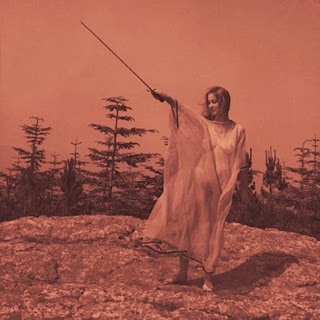
Unknown Mortal Orchestra's II

Still, many artists decided to take different approaches to records released in 2013. Wavves went on some kind of Nirvana kick, Thee Oh Sees went even more insane on Floating Coffin, Surfer Blood became a smooth running pop-rock band and Wild Nothing suddenly recruited David Byrne. One artist who made quite the laudable risk, was Unknown Mortal Orchestra on II. Main man Ruban Nielson somehow reached a point, where his guitar experimentation was just as accessible as his smooth-running singles. However, II works as a dark trip into Nielson's psyche, which at first doesn't seem to be too bad, until he intones that "isolation can put a gun in your hand" on opener, "From the Sun". There's the serpentining "The Opposite of Afternoon", where Nielson cites broken bones and slit wrists, the punk-ish "Swim and Sleep (Like a Shark)" where addiction looms in the details, and the soulful yet melancholy "So Good At Being in Trouble".

On the same wavelength as Unknown Mortal Orchestra (in mining pyschedelia and rock's past) is Foxygen (both bands coincidentally toured together). Foxygen have been very well known for their inter-band drama throughout the year, none of which will be mentioned, but when listening to their sophomore effort, We Are the 21st Century Ambassadors of Peace and Magic, you find their drama forgettable, where the music is anything but. Unlike Nielson, frontman Sam France focuses his lyrics on hyper-specifics, most notably on the Velvets-esque "No Destruction". "I found you sipping milkshakes in the parlor of the hotel", France purrs, sounding hurt. Later, he just wants someone to smoke pot in the subway with, reads the bible, meets someone's daughter (who happens to have rhino shaped earrings in her ears) and sings about love.

We could also cite 2013 as the year of "emotional electronics". It's a well known fact that electronic music can seem a bit lifeless, but some artists seemed intent on blowing that notion out of the water. Rhye made sex music for those who'd rather say "make love" (doesn't hurt that Woman is like a cross between Sade and Air). There was Baths, the project of Will Wiesenfeld, who maintained a bleak outlook on the excellent Obsidian, offering uncomfortable ruminations of sex and death. Daughn Gibson infused his trucker blues with some Nicolas Jaar tones on the brilliant Me Moan. Gibson's baritone is backed by sampled vocal arpeggios on "You Don't Fade", and screaming bagpipes on "Mad Ocean". But it's "Franco", a song depicting a family marred by a suicide, that remains the album's most potent and poignant statement. And speaking of Nicolas Jaar, he got together with guitarist Dave Harrington as Darkside, and re-imagined electronic and pyschedelic music on the excellent Psychic. And if you still wanted something to dance to, listen to Doldrums' Lesser Evil.

Matthew Otto and Devon Welsh of Majical Cloudz

But the best electronic music was that of which placed us inside ourselves. The best examples of this are Majical Cloudz's Impersonator and Autre Ne Veut's Anxiety (no coincidence both musicians are friends of the other). Devon Welsh of Majical Cloudz is straight edge, has a shaved head, wears only white t-shirts and jeans, and speaks in interviews like Ian MacKaye. However, his music with producer Matthew Otto is minimalist electronic and pop, but when paired with Welsh's nakedly emotional lyrics, it has the same urgent effect of any hardcore band. Impersonator is vague, yet somehow specific, some anomaly floating in the fog. Welsh's lyrics evoke childhood marred by a gunshot ("Childhood's End"), succumbing to your worst fears ("This Is Magic") and offers ruminations on death and love at the same time (the chillingly beautiful "Bugs Don't Buzz"). Autre Ne Veut's Anxiety has the same lyrical effect as Impersonator but is crammed with bizarre sounds and screaming electronics. It is anything but subdued, with Arthur Ashin screaming himself raw in chest-beating, teary eyed catharsis. The songs of the aptly titled Anxiety all strike a deep chord, but no more on the brilliant highlights "Play By Play", "Counting" and "World War".

It seems that some of the best music of 2013 actually placed us inside of ourselves, making us realize our faults, but comforting us at the same time. The National continued their stories of middle aged malaise on the excellent Trouble Will Find Me, which held some of Matt Berninger's best stingers yet ("you didn't see me I was falling apart, I was a white girl in a crowd of white girls in the park" from "Pink Rabbits"). Phosphorescent lost both his studio and a girlfriend in rapid succession, so he traveled down to Mexico, to write the heartbroken Muchacho. Yet, never has a record been so saddening, but life affirming at the same time as Muchacho, especially on "Song for Zula", a lovelorn trip through the desert, recalling U2, Springsteen and Fleet Foxes. Jordan Lee makes beautiful music as Mutual Benefit, and I can't think of a more truly titled record than Love's Crushing Diamond. Lee finds himself falling in love, quitting his job, watching his friend struggle with addiction and picking flowers by the river. Songs like "Golden Wake" and "Advanced Falconry" revel in their simplicity, while still being profound statements, and "C.L. Rosarian" and "Strong Swimmer" are beautiful ruminations on love as we know it.

Local Natives' Hummingbird
What came as surprising, was how Smith Westerns' Soft Will had the same effect as the aforementioned records. If Dye It Blonde was the party record, then Soft Will is the following night, a long exhale of things done wrong. Recalling All Things Must Pass and Bandwagonesque, the songs of Soft Will  are all about chain smoking, writing poetry, losing idols, losing love, comforting others and finally on the closer, "Varsity", finding love once again. Like Smith Westerns, no one thought a record like this could come from Local Natives, but it sure did on Hummingbird. After the sun kissed Gorilla Manor, Local Natives went through a period of change, with the departure of bassist Andy Hamm and the passing of pianist/singer Kelcey Ayer's mother. This is quite pronounced on the band's sophomore release, a record of densely layered, beautiful songs, bundled with personable emotion. There's the heartbreaking vocal ascent of "You & I", the specific details of a breakup on "Heavy Feet" ("flour in your hair / staples in your jeans / fireworks at the water / you were holding / a styrofoam cup in between your teeth"), the epic "Breakers" (best song of 2013) and the cathartic "Colombia". "Colombia" remains the album's centerpiece, with swelling strings, a stately piano, and a percussive build up. All of this as Ayer sings a song dedicated to his deceased mother ("Patricia, every night I ask myself / am I loving enough"). Hummingbird is an album that is emotionally draining, yet demands the listener to grow and heal with the band themselves.

Of course, there was also the year in debuts. Alex Calder was another welcome member of the Captured Tracks roster with Time and Sky Ferreira bridged the gap between Katy Perry and Suicide, on the excellent Night Time, My Time. There was also Yabadum's self titled debut, a record that pulled influences from indie bands gone by (The Strokes, Interpol, LCD Soundsystem). The band offers tight and interesting songwriting, especially on "Little Rooms" and the elegant closer, "Earth It Shakes". But no debut was more flat out brilliant than King Krule's 6 Feet Beneath the Moon. Archy Marshall is like Paul Weller with a sampler, or Mike Skinner with a telecaster. He seems to be the new voice of the disaffected British youth. His stance doesn't happen to be political though (maybe a wee bit on"Easy Easy"), but he focuses more on the world around him. He's a young man, growing up in a world like ours and he's experiencing what we all must at times. Sometimes he's pissed off ("A Lizard State"), heartbroken ("Has This Hit?"), depressed ("Cementality") and self loathing ("The Krockadile"). He recites some Dylan-esque poetry on "Baby Blue" and actually quotes poet W.H. Auden on "Ocean Bed". "Neptune Estate" is a lovingly composed, lovelorn piece, with a touch of Dilla. The perfect record for the late night train home.

Hebronix's Unreal
Ambition ran through much of 2013 as well. Merchandise made one of the most intricate post-punk/new-wave records on Totale Nite, and Beach Fossils successfully distilled every Brooklyn subgenre into Clash the Truth. Kurt Vile made the rockin' epic, Wakin On a Pretty Daze. Seventy minutes of pure drawled rock wisdom. Ex-Yuck frontman, Daniel Blumberg, recorded the best break up album the 90's never produced with Unreal. My Bloody Valentine proved they were still the best with m b v. Youth Lagoon left his garage, to record the deeply layered Wondrous Bughouse. Wondrous Bughouse can be ranked with the classic "big" records, like Deserter's Songs and The Soft Bulletin, not just in sound, but in lyrical content. 2013's best rap music was steeped in ambition, from Chance the Rapper, to Danny Brown, to Antwon, to Milo. Arcade Fire's Reflektor was a strong contender for most ambitious, a double album produced by James Murphy. Arcade Fire boogie out with David Bowie and Colin Stetson on the title track, and groove out on the better part of the first disc. But it's the second disc, that solidifies Arcade Fire's place, like the sweeping "Awful Sound (Oh Eurydice)" to the amazing finish of "Porno", "Afterlife" and "Supersymmetry".

Alex Zhang Hungtai, main member of Dirty Beaches

But no record was as ambitious, as personal, as cohesive, as cathartic, as Dirty Beaches' Drifters / Love is the Devil. Yes, this record, is the best of what 2013 had to offer. I don't listen to it as much as I should, but that only speaks to it's power. It's worked it's way so far into my psyche, that it becomes almost difficult to listen to, but whenever I listen to it again, I am still completely floored by it's instrumentation and emotion. The record doesn't exist as some paragon of comfort, but more of a testament of understanding. Shit sucks, and it can only get worse, but hey, that's life.  Alex Zhang Hungtai has curated one of the most unforgettable musical experiences of 2013 with this record. Whether it be the beautiful ambient pieces such as "Berlin" or "Love is the Devil" or the Neil Young like "Alone At the Danube River" to more rollicking pieces such as "Casino Lisboa" or "I Dream In Neon", I could write paragraphs about each song. Drifters / Love Is the Devil is the sound of a man's heart being torn to pieces, and then slowly being healed. Because after all, the best albums offer a glance not just at ourselves, but the artist as well.

And that's 2013.

R.I.P. Lou Reed

Top 40 Albums of 2013
40. The Dismemberment Plan - Uncanney Valley
39. Chance the Rapper - Acid Rap
38. Julia Holter - Loud City Song
37. Willis Earl Beal - Nobody knows.
36. Okkervil River - The Silver Gymnasium
35. Surfer Blood - Pythons
34. Vår - No One Dances Quite Like My Brothers
33. Speedy Ortiz - Major Arcana
32. Sky Ferreira - Night Time, My Time
31. Danny Brown - Old
30. Parquet Courts - Light Up Gold
29. Milk Music - Cruise Your Illusion
28. Unknown Mortal Orchestra - II
27. The Men - New Moon
26. Rhye - Woman
25. Foxygen - We Are the 21st Century Ambassadors of Peace and Magic
24. Merchandise - Totale Nite
23. Waxahatchee - Cerulean Salt
22. Kurt Vile - Wakin On a Pretty Daze
21. Milo - Things That Happen At Day / Things That Happen At Night
20. Mikal Cronin - MCII
19. Darkside - Psychic
18. Smith Westerns - Soft Will
17. Yabadum - Yabadum
16. Mutual Benefit - Love's Crushing Diamond
15. My Bloody Valentine - m b v
14. Iceage - You're Nothing
13. Baths - Obsidian
12. Arcade Fire - Reflektor
11. The National - Trouble Will Find Me
10. Phosphorescent - Muchacho
9. Youth Lagoon - Wondrous Bughouse
8. Hebronix - Unreal
7. Daughn Gibson - Me Moan
6. Majical Cloudz - Impersonator
5. Beach Fossils - Clash the Truth
4. Local Natives - Hummingbird
3. Autre Ne Veut - Anxiety
2. King Krule - 6 Feet Beneath the Moon
1. Dirty Beaches - Drifters / Love Is the Devil